Vanlife Morocco: A Quick Beginner’s Guide
You’re probably here because you’re somewhere along the planning stage for your first trip to Morocco in a campervan or motorhome. And if the idea of encountering a new and exciting culture, exploring unbelievably diverse landscapes and being welcomed with open arms gets your heart racing, then vanlife in Morocco might just be your perfect adventure.
This North African gem delivers on so many levels, and for a vanlifer is what dreams are made of. One day you’re waking up surrounded by enormous desert dunes, the next on a mountain with snowflakes gently falling onto your windscreen, before finding yourself on a gorgeous golden-sand beach with a view of the Atlantic sea.
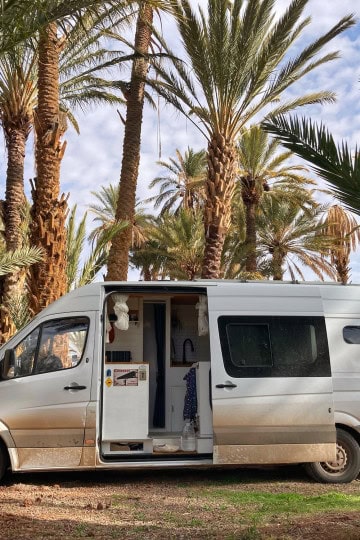
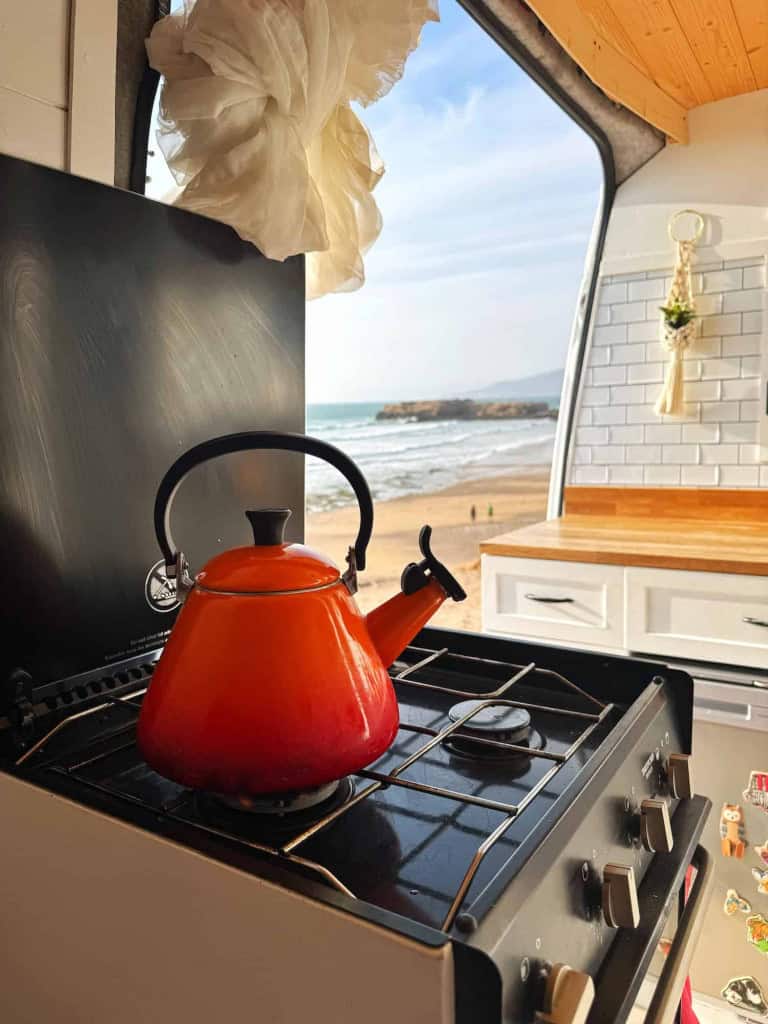
However, vanlife Morocco is completely different to road-tripping around Europe, and there are plenty of things you should be aware of before you go to help you hit the road prepared and confident. Whether you’re in a self-converted Sprinter van like us, or a fully kitted-out motorhome, this quick beginner’s guide will lay the foundations for what you need to know before embarking on your Moroccan vanlife journey.
Getting There: The Jump from Europe to Africa
Most people begin their vanlife journey to Morocco from mainland Europe. The easiest route? Drive through Spain and hop on a ferry from either Algeciras or Tarifa to one of the two Tangier ports.
Open return tickets cost around €200, depending on time of year, and can be booked online or at one of the many agencies close to the ports.
Ferries run every hour and the journey takes between one and two hours depending on the route you choose and the weather conditions.
Top Tip: On arrival in Morocco, they’ll issue you a temporary import permit for your van, typically valid for 6 months. Firstly, make sure you get one, and secondly DO NOT lose this - you may be asked for it when travelling around and you will not be able to leave the country in your vehicle without it.
Driving in Morocco: What to Expect
Driving in Morocco is an entire experience in itself. It can be infuriating, baffling, and at times even terrifying. From animals and people wandering down motorways to extremely dodgy overtaking maneuvers and parking on roundabouts, you’ll see it all.
But please don’t let any of that put you off. Once you’re accustomed to it and have learned to anticipate the unexpected, you’ll be fine.
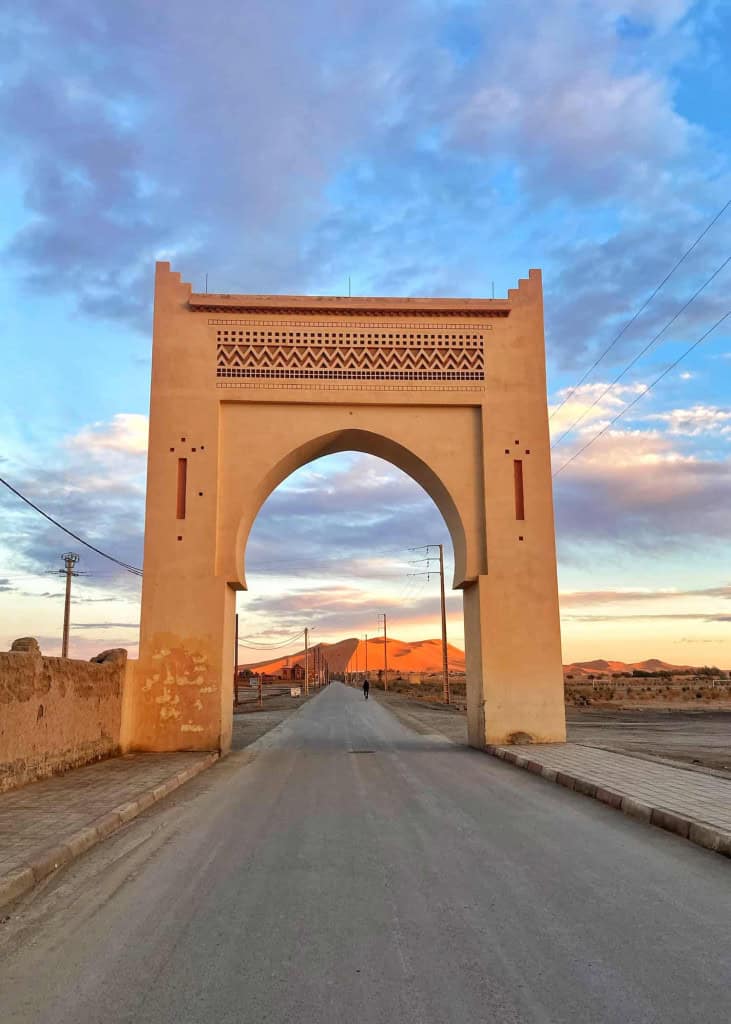
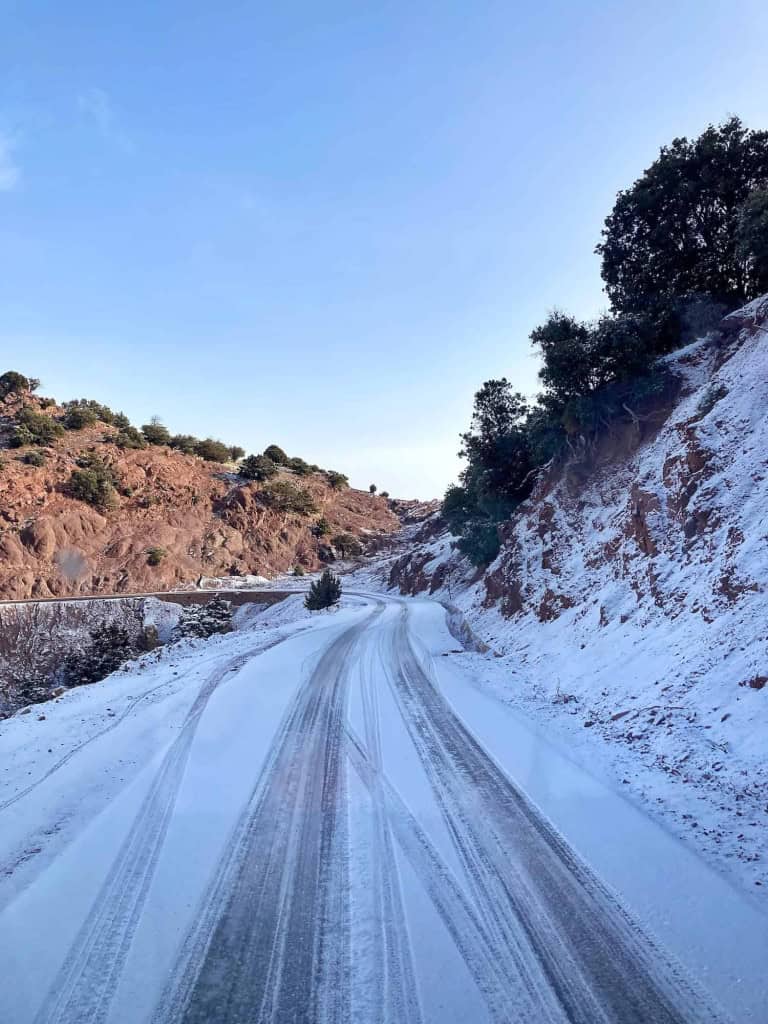
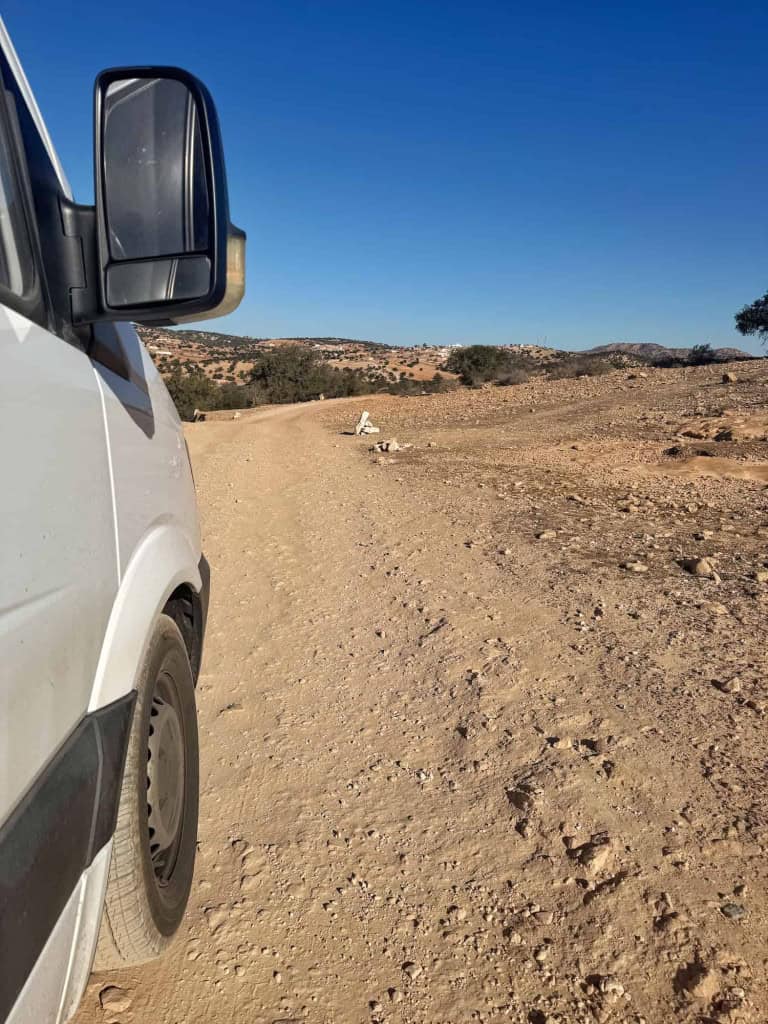
Contrary to what you may read elsewhere, the roads themselves are in pretty decent condition, especially the main ones. This is thanks to huge and ongoing improvements implemented throughout the country. But driving laws and norms are largely disregarded and it’s kind of a wild west on the roads here.
Key tips for keeping safe are to take your time, expect the unexpected, and don’t let your concentration dip. Oh and don’t drive at night - many drivers don’t turn their headlights on and there are still lots of people/animals wandering the roads, just harder to spot in the dark.
Must-Know Rules:
- Drive on the right and give way to traffic from the left
- Always carry your driving licence, passport, and vehicle documents - police stops are routine and they will always ask you to produce them
- Speed limits change often and are enforced - especially around towns
- If you have an accident, you’re required to stay at the scene and wait for police to arrive
Petrol stations are plentiful on major routes, but if you’re heading into the mountains or desert, top up when you can. Diesel (gasoil) is cheap by European standards, which is a bonus for vanlifers on a budget.
Where to Stay: Campsites, Wild Camping & Parking Spots
One of the joys of vanlife in Morocco is the freedom you just don’t get in many other countries. Where else can you literally sleep in a remote desert, atop a majestic mountain, in a forest full of monkeys and by a beautiful golden-sand beach, all in the same week?
There are generally three types of parkup in Morocco so we’ll give you the rundown on all three.
Wild Camping
While generally prohibited by Moroccan law, is widely tolerated, especially in remote areas. It’s overwhelmingly safe and some of the best places we’ve ever stayed in Morocco have been completely free so we’d highly recommend trying it. Check out this post on wild camping in morocco in a campervan or motorhome for full details.
Campsites
Morocco campsites can be hit and miss, with lots having facilities falling below the standard of what you’d expect in many European countries. But there are also plenty of excellent, well-equipped, affordable campsites with showers, Wi-Fi, and even laundry facilities. Check out this post on the best Morocco campsites for some guaranteed unforgettable stays.
Paid Guarded Parking
This is a strange phenomenon unique to Morocco where a guy in a high vis vest will lay claim to a plot of land or parking area and charge a fee for you to stay there, usually it’s nominal (20-30 MAD).
Lots of these spots have permits provided by the local government. However, many of the operators’ only claims to legitimacy are their high vis vests. Despite this, they’re displaying an entrepreneurial spirit and in return you get the peace of mind that arises from knowing someone is watching over your home on wheels, often round the clock. So while you’ll see some people grumbling about having to pay these guys, we don’t mind this type of parking at all.
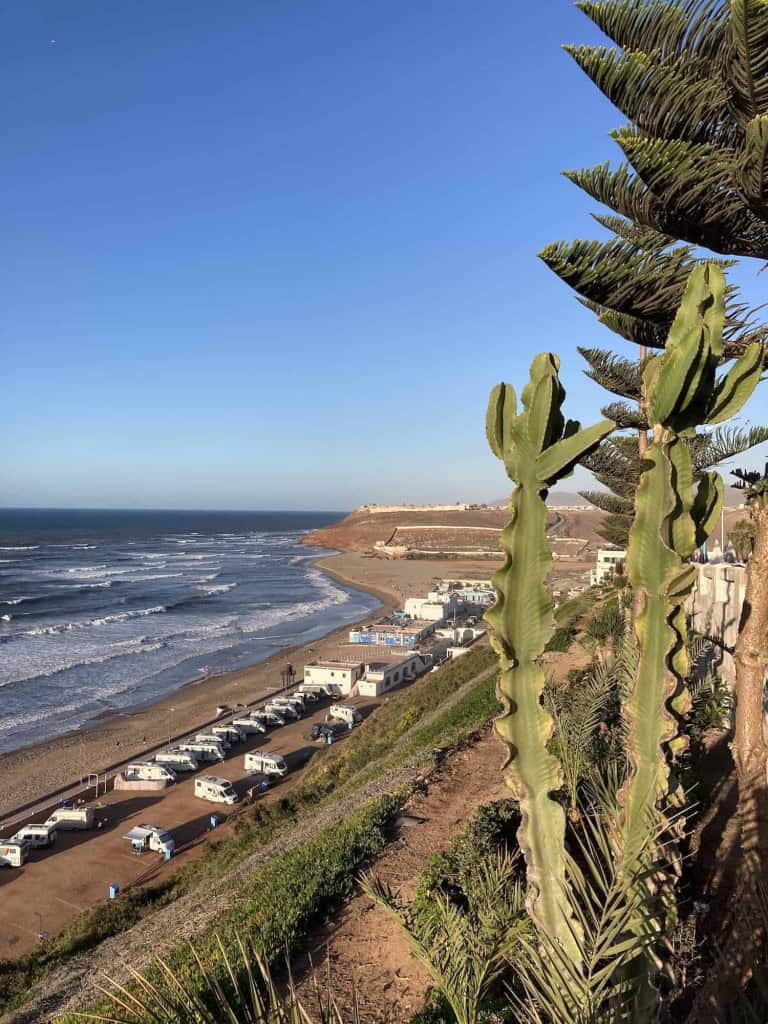
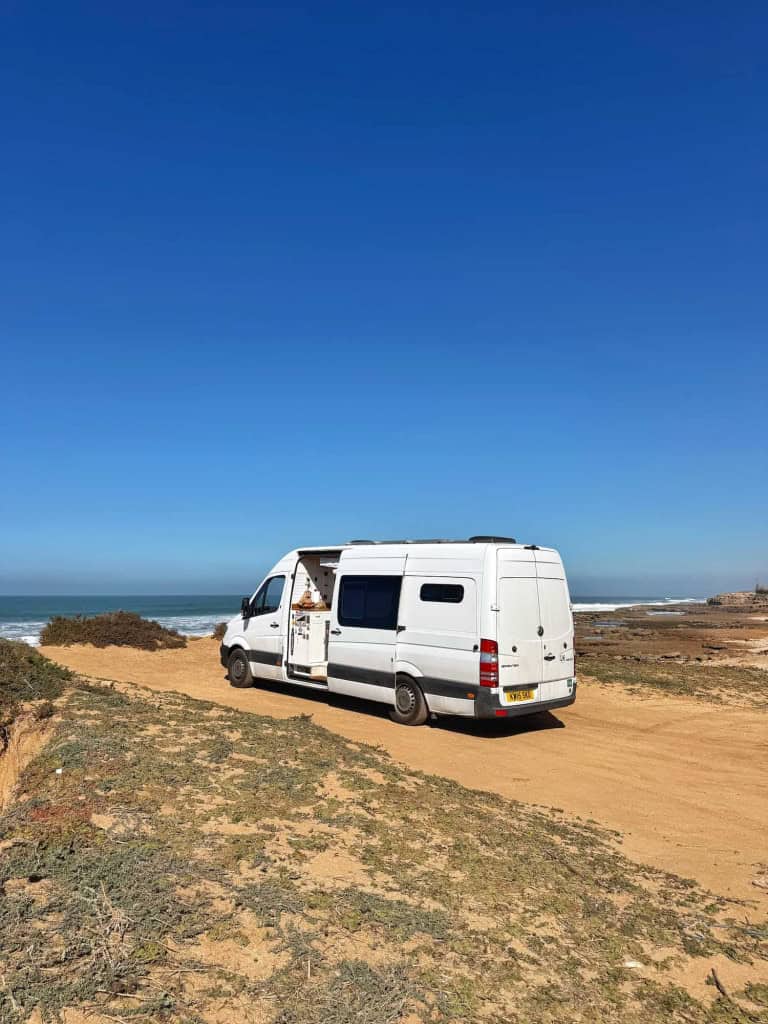
For safety and comfort, many travellers, including us, mix free spots with stays at campsites and paid parking areas. The best tip we can give on choosing where to lay your head at night is to do your research thoroughly. Apps like Park4Night are your best bet for knowing what to expect from a parkup before you rock up.
Safety: Is Vanlife in Morocco Safe?
It’s hard to make sweeping statements about safety in any country. It depends on many things - often beyond your control. Your gender, race, or whether you’re LGBTQ can all impact how safe you feel or are treated while traveling.
Feeling safe is also deeply personal. It’s shaped by your own experiences and perceptions. Please keep that in mind here. That said, statistically, Morocco is one of the safer countries in the region. We’ve personally never had any issues.
There are still things to watch for. Taking a few smart precautions can really help reduce the chances of trouble.
Violent crime against tourists is rare. Tourism is a huge part of the economy, so the police take it seriously. Morocco’s overall crime rate is lower than many neighboring countries. But like anywhere, no place is perfect.
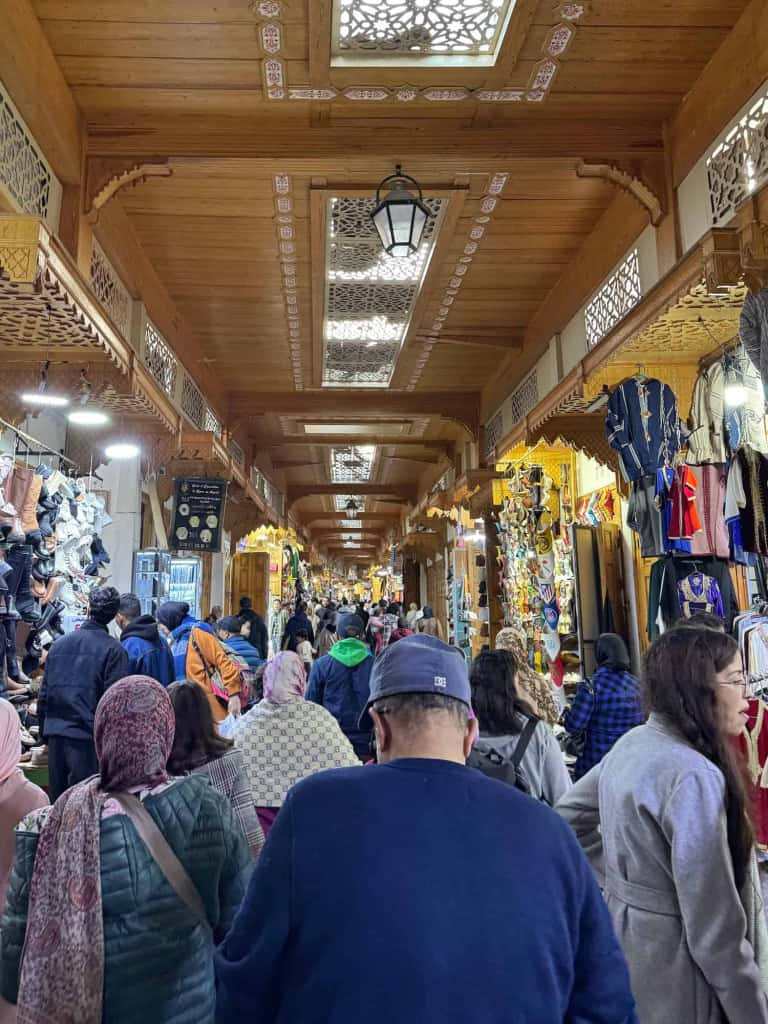
In bigger cities like Marrakech, Fez, or Casablanca, you should be more cautious. Petty crime is more common there. Bag snatching, pickpocketing, and scams happen, especially in crowded places - markets, train stations, and busy city streets.
Solo travelers, especially women, might experience catcalling or unwanted attention. Sadly, this happens more than we’d like. It’s usually not dangerous, but we know it can be upsetting. We understand how draining and uncomfortable it can feel.
What To Wear & Scams
Dressing modestly might reduce unwanted attention. Also, avoid walking alone at night if possible - just to stay on the safe side.
Scams do exist here, as in most tourist-heavy places. We mainly experienced them in Marrakech, around Jemaa el-Fnaa. There, we met pushy street sellers, fake guides trying to drag us places, and overpriced meals that were honestly terrible. Stay polite, but be firm. Say no clearly. Don’t let yourself get pulled into anything you’re not comfortable with.
Avoid accepting help from strangers who suddenly offer to guide you. It often comes with strings attached.
If someone makes you feel unsafe, tell them you’re calling the tourist police. That usually stops them in their tracks.
Tourist police are very visible in Morocco. You’ll see them everywhere, especially near popular attractions. There are also lots of undercover tourist police so it’s often advised that literally shouting “police” if you find yourself in a tricky situation is enough to alert them and to deter whoever you’re faced with.
Connectivity: Staying Online on the Road
Staying online in Morocco is straightforward. The main networks are Inwi, Maroc Telecom, or Orange and local SIM cards are available to purchase from lots of smaller grocery stores, while in cities there are outlets for all the big providers. Data packages are relatively cheap and range from pay as you go to unlimited data.
Another alternative is to opt for an eSIM, though these can sometimes work out more expensive. As we work online and need constant connectivity and unlimited data, we use Holafly which provides unlimited data at competitive prices. Another benefit of an eSIM is that they are able to connect to all of the networks’ masts meaning they provide unrivalled connectivity.
5G connectivity in Morocco is rare but increasing, however in cities and towns, 4G or LTE coverage is solid. Remote areas might see a drop to 3G or even no signal - but hey, that’s part of the charm, right?
Culture, Customs & Vanlife Etiquette
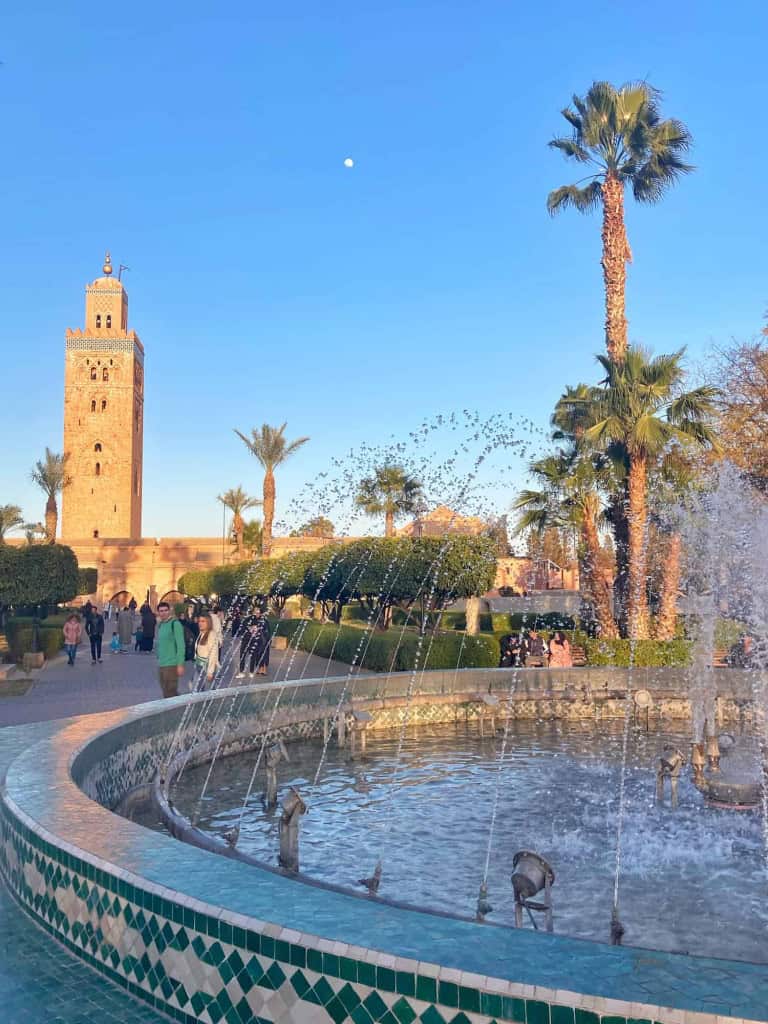
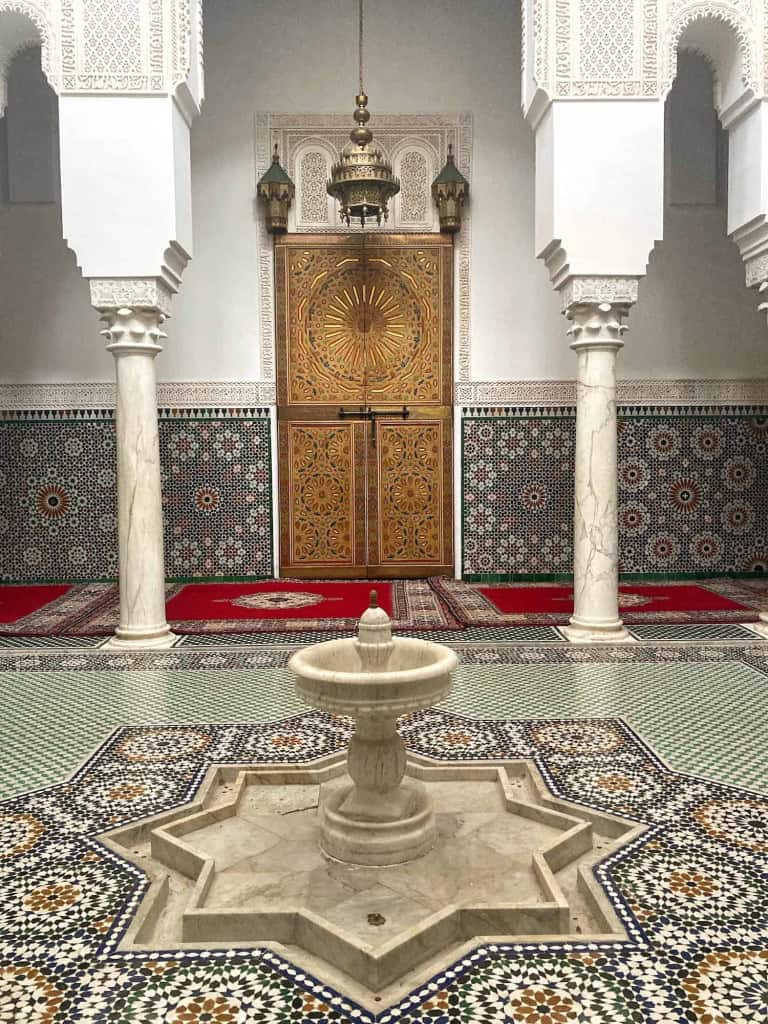
Morocco is a Muslim country, and while it’s tourist-friendly, respecting local customs is key.
You don’t need to cover up completely, but dressing modestly - especially in rural areas - is appreciated.
Vanlife-specific etiquette:
- Keep alcohol consumption discreet - drinking in public is prohibited and punishable
- Dispose of your rubbish, toilet, and grey water responsibly
- Be respectful of where you park
Weather: Seasons on the Road
On our first visit to Morocco, someone described it to us as “A cold country with a hot sun” and we’ve generally found that to be incredibly accurate. It’s a large land mass encompassing a hugely diverse mixture of terrain, from golden mediterranean beaches in the north to the vast snow-capped Atlas Mountain Range at its centre, and of course the arid Sahara desert in the south.
As such its climate is equally varied. But as a general rule of thumb, even in the areas where the mercury can get pretty high, the temperature drops significantly as soon as the sun disappears, whether that’s momentarily behind a cloud or beyond the horizon at sun down.
Winters, in general, tend to be wetter and milder whereas the summer months are usually extremely hot and dry. If you’re planning on travelling throughout the country visiting different areas then you’re likely to encounter a wide range of temperatures and conditions so it’s best to be prepared for all seasons and pack for all climates - layers are your friend.
Eating and Drinking
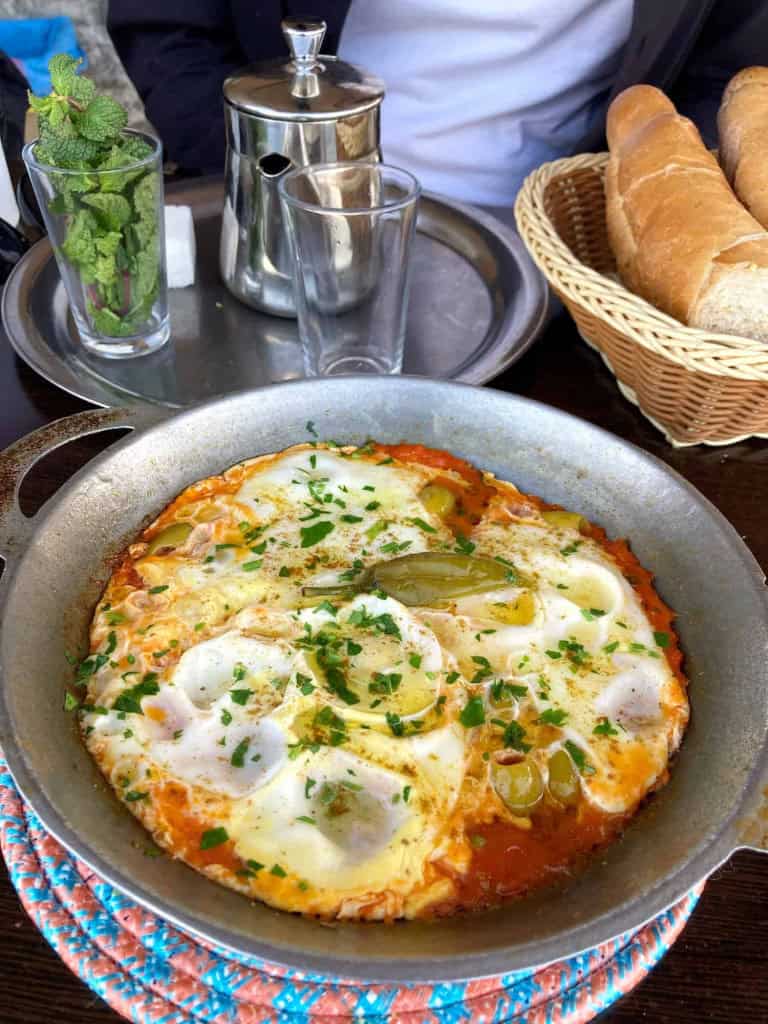
For many visitors, sampling authentic Moroccan food at local restaurants is something they’re excited to get stuck into - we certainly are every time we come. Think tantalising tagines, freshly baked bread, unmatched olives, and sweet mint tea.
But while trying out new restaurants is exciting, one of the best things about visiting Morocco in a van with its own cooking facilities is being able to take advantage of all of the amazing fresh produce on offer by cooking for yourself.
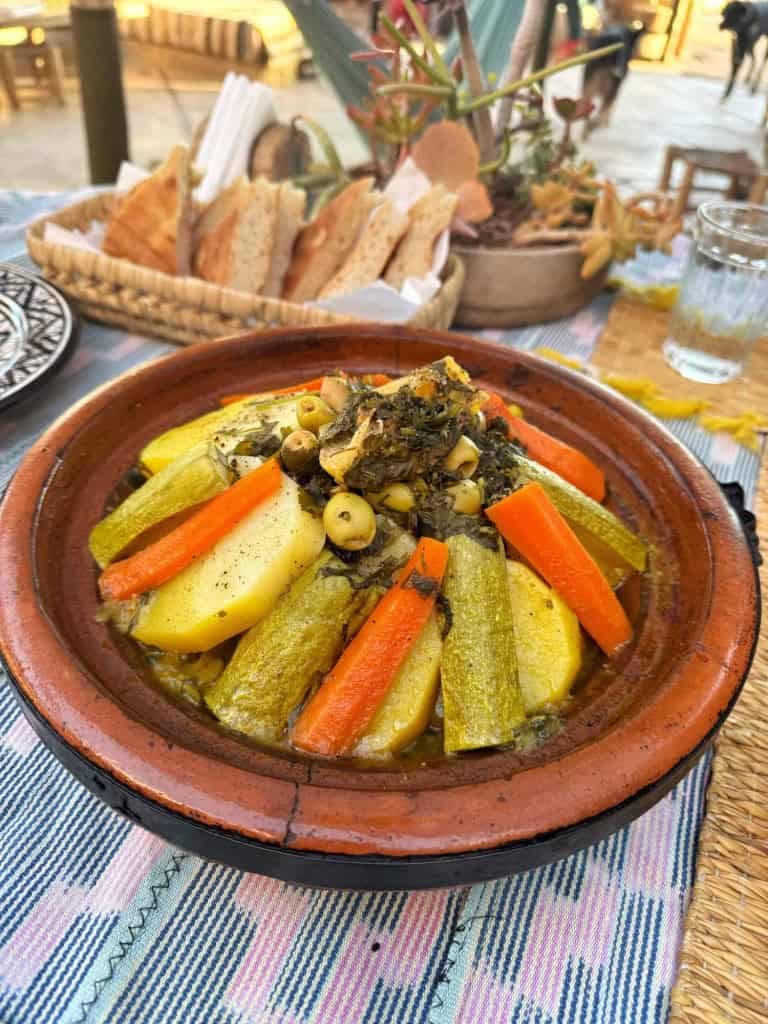
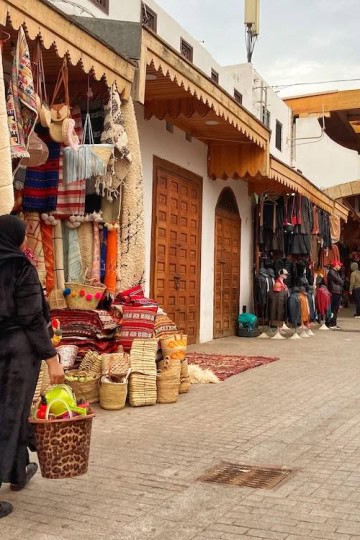
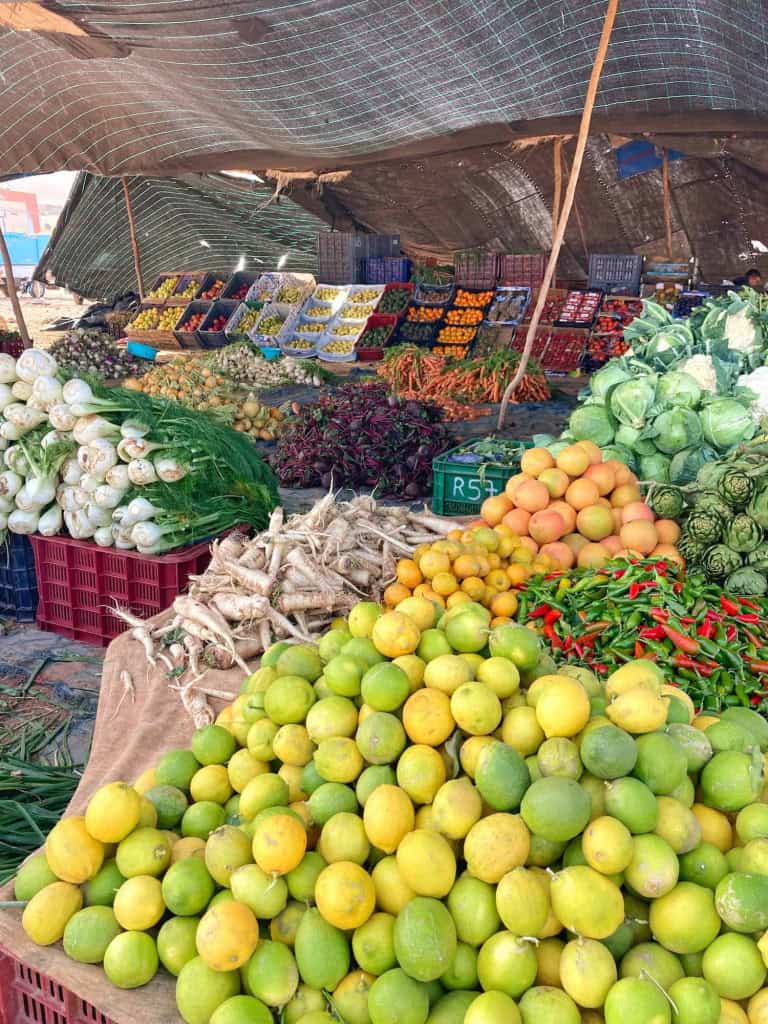
Markets or souks are full of exotic fruit, vibrantly coloured vegetables, the freshest of seafood from the morning’s catch, and much more. Regardless of your dietary requirements, you’ll be well catered for here.
There are also lots of larger supermarkets, the two main chains being Marjane and Carrefour, where you can purchase lots of European and world foods and goods. Many Carrefour supermarkets also stock alcohol, something that’s relatively hard to come by here.
The water in Morocco is officially, according to the government, safe to drink. But having dug a little bit deeper in our research, as well as from personal experience, we choose not to. That’s entirely up to you, but we’d recommend either sticking to bottled water or getting a filter that you trust.
Budgeting for Vanlife Morocco
Great news - Morocco is kind to your wallet. From food to fuel to campsites, most things cost less than in Europe and you can easily travel on a modest budget.
Campsites generally fall within the €5 - €10 mark, but can be double that or more depending on location and facilities. Fuel is around €0.90/litre (as of last check). Groceries from the markets and souks are generally very cheap, but expect to pay more in supermarkets or for imported or out of season goods. A meal in a restaurant can be as little as a few Euro, and even in top restaurants tend to be far cheaper than their equivalent in Europe.
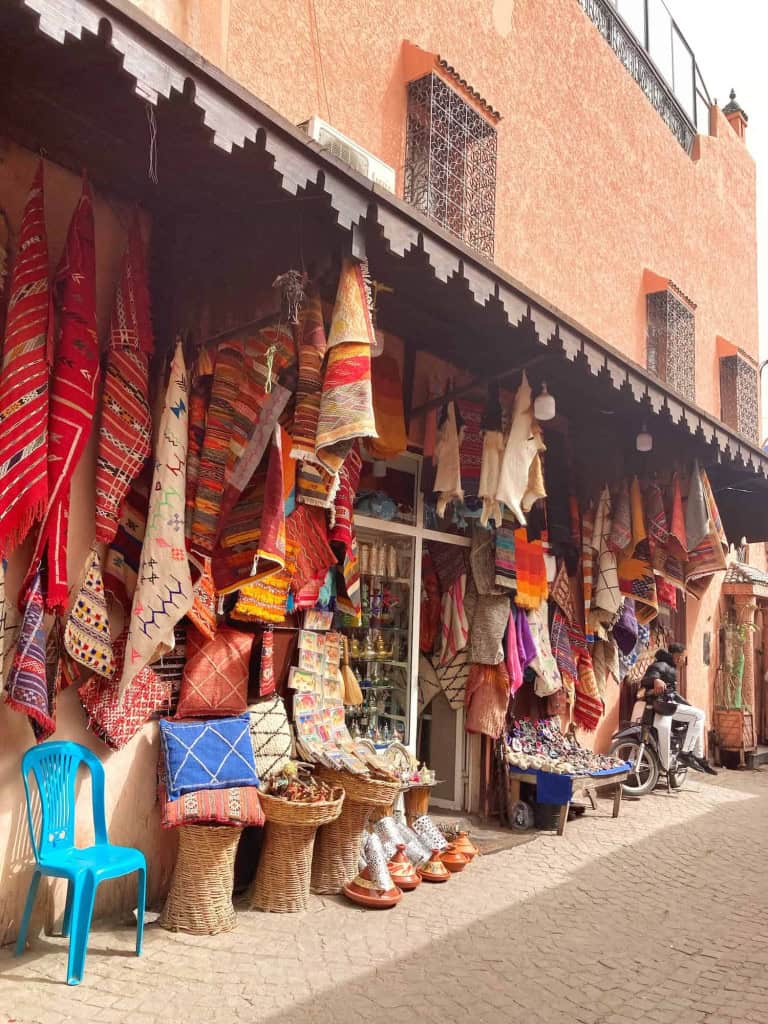
One important thing to know is that cash is king and in the vast majority of places you will not be able to pay by card, so it’s essential to always have some dirhams on hand.
Al Barid banks have the only ATM cash points that don’t charge fees in Morocco, and we’ve heard of others charging anywhere up to €17 so it’s worth keeping an eye out for them. They’re often attached to Post Maroc post offices but do also have many stand alone branches.
Language & Communication
Many people think of Morocco as an Arabic country, and therefore mistakenly presume that the language spoken here is Arabic. The reality is far more nuanced.
There are in fact numerous different languages spoken throughout the country and this varies depending on the setting and the location.
The primary language spoken is Moroccan Arabic, also known as Darija. It’s distinct from traditional Arabic and contains elements of Berber/Amazigh dialects, French and Spanish.
French is spoken by about 30% of the population but this tends to be older generations. Spanish is common on the north coast but far from universal. Increasingly, English is spoken particularly by the younger generations who now learn it in school.
Whatever languages you speak, our top tip is to learn and use a few phrases of Darija before your trip to Morocco. It will go a long way to endearing you to anyone you're speaking to and we’ve always found that Moroccan people are happy and grateful for you at least trying to use a few words, however badly pronounced and basic.
Here are a few useful phrases to master:
- Salam: Hello
- As-salaam Alaykum: Peace be with you, but often used as “hello” (formal)
- Walaykum As-salaam: And unto you peace, the response you give to As-salaam Alaykum
- Beslama: Goodbye
- Shukran: Thank you
- Afak: Please
- Labas? How are you?
- Labas, shokran: I'm fine, thank you
- Tasharafna: Nice to meet you
- Naam/Wah: Yes
- La: No
- Hadshi bneen: This is delicious
Downloading Google Translate app with offline Arabic and French packs can also help a lot in a bind.
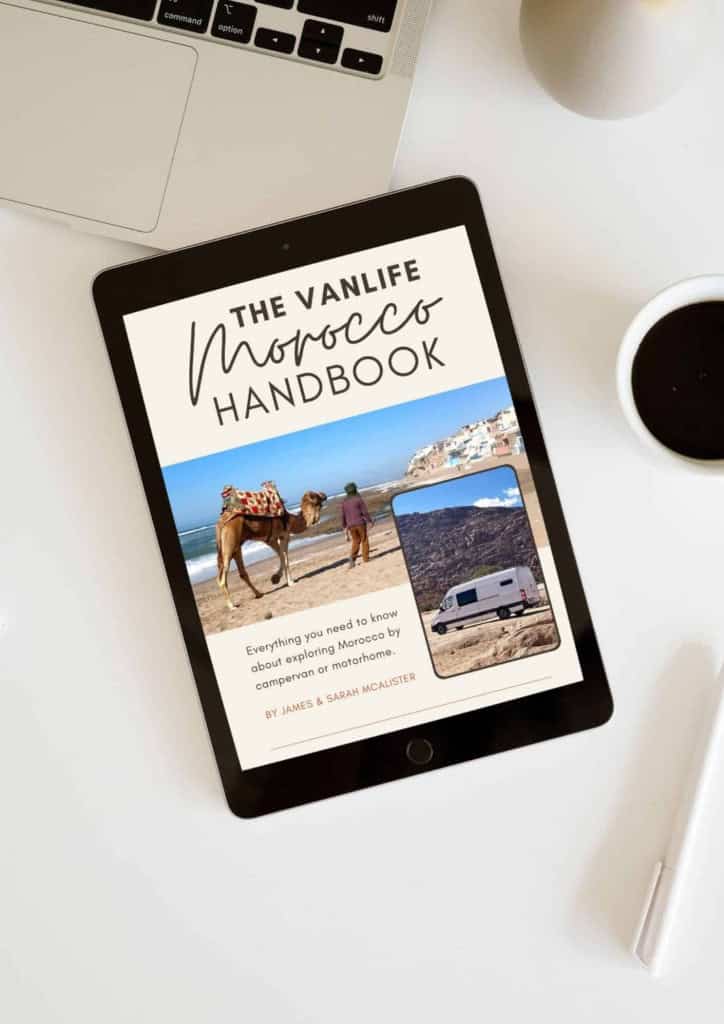
The Vanlife Morocco Handbook
Want more Morocco Vanlife tips?
We’ve put together everything we wish we’d known before our first trip to Morocco in an epic, 174-page ebook.
It's packed with even more practical nuggets, route ideas, in depth wild camping info, and loads more honest advice to help you plan your own Morocco van adventure. Grab the guide and hit the road with confidence.
£19.99 £14.99 limited time launch offer