15 Magical Things To Do in Pamukkale, Turkey
Pamukkale is home to three of the most popular tourist attractions in Turkey. The ancient city of Hierapolis, the famous white travertines and Cleopatra's Antique Pool.
The unique combination of natural beauty and ancient history makes it one of the most fascinating places to visit in the country and it attracts millions of tourists each year.
But there are so many different ways in which you can experience the gorgeous landscape.
So here we’re going to run through all the amazing things to do in Pamukkale. Plus give you lots of useful tips on things like how to beat the crowds and essential items to take with you.
Things To Do In Pamukkale
Explore The Iconic Travertine Terraces
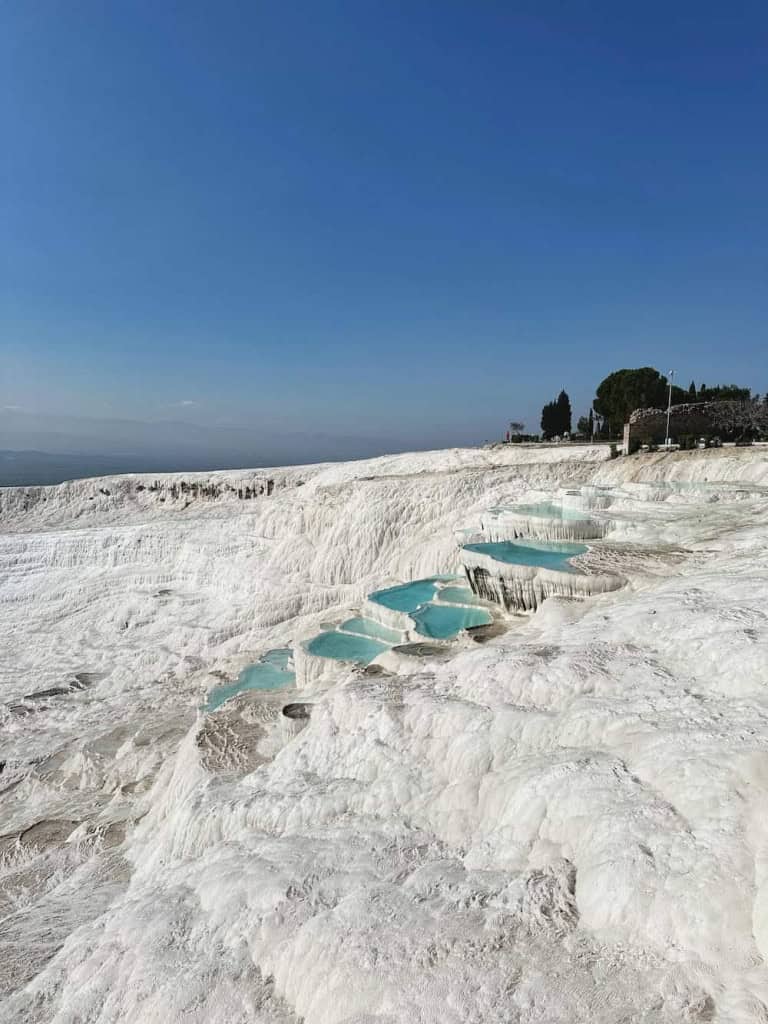
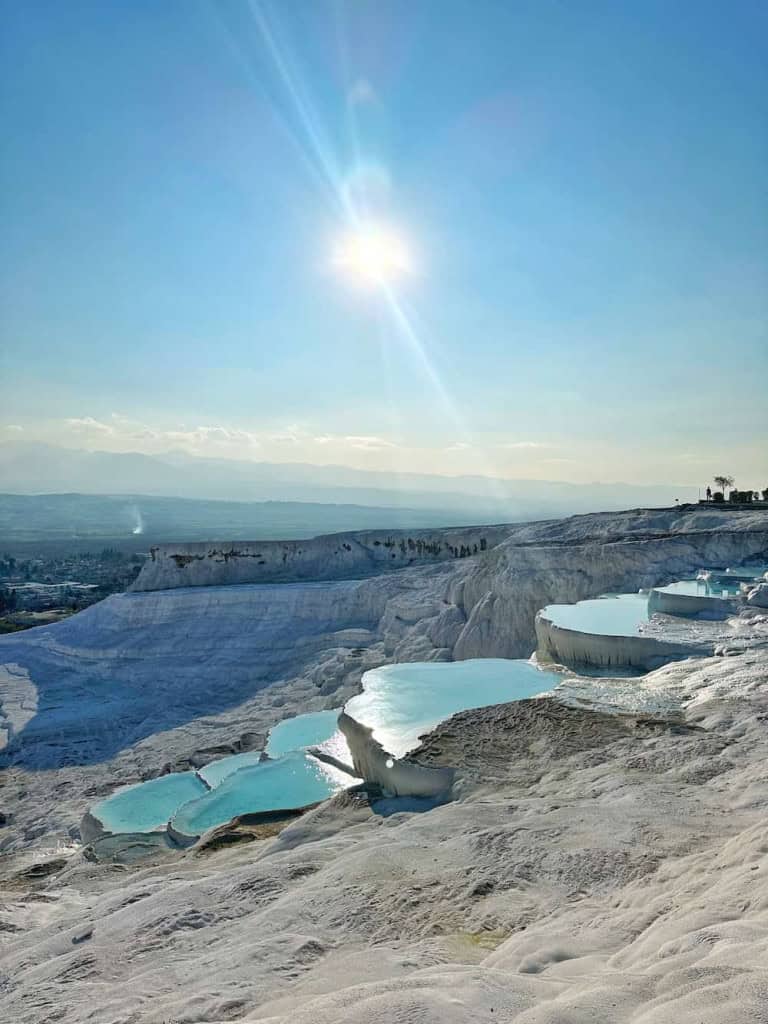
Otherwise known as the ‘Cotton Castle’ due it’s appearance, from a distance you’d be forgiven for mistaking the blindingly white vista for a mountainside of snow. And that’s part of the allure.
Why Are They White?
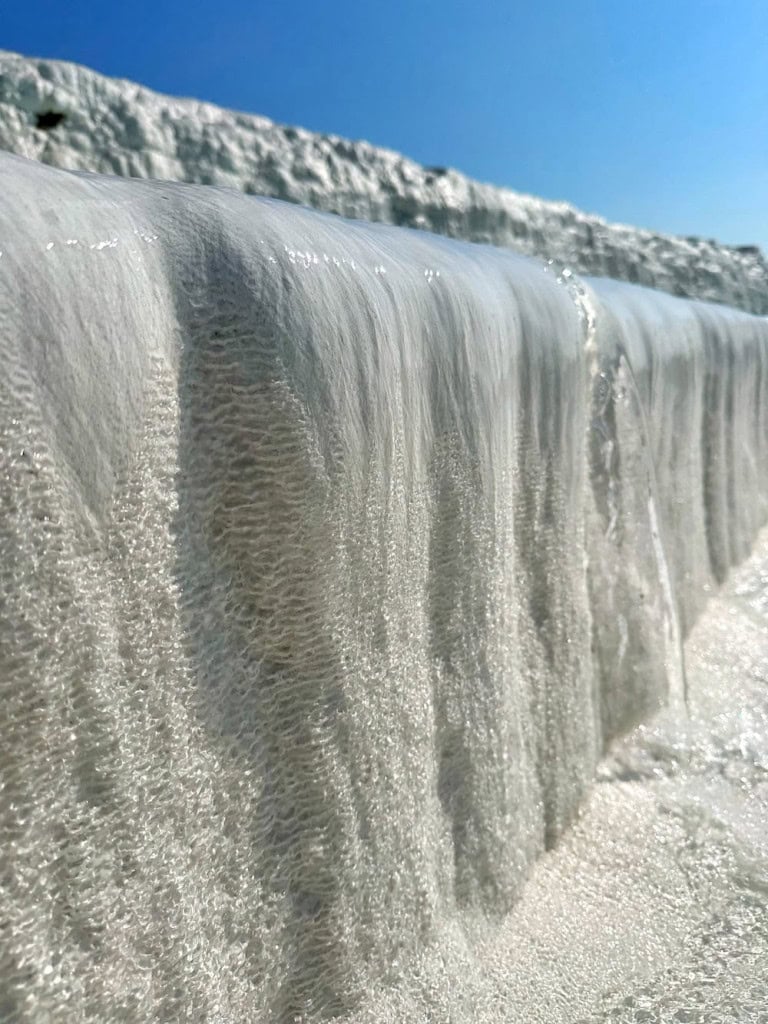
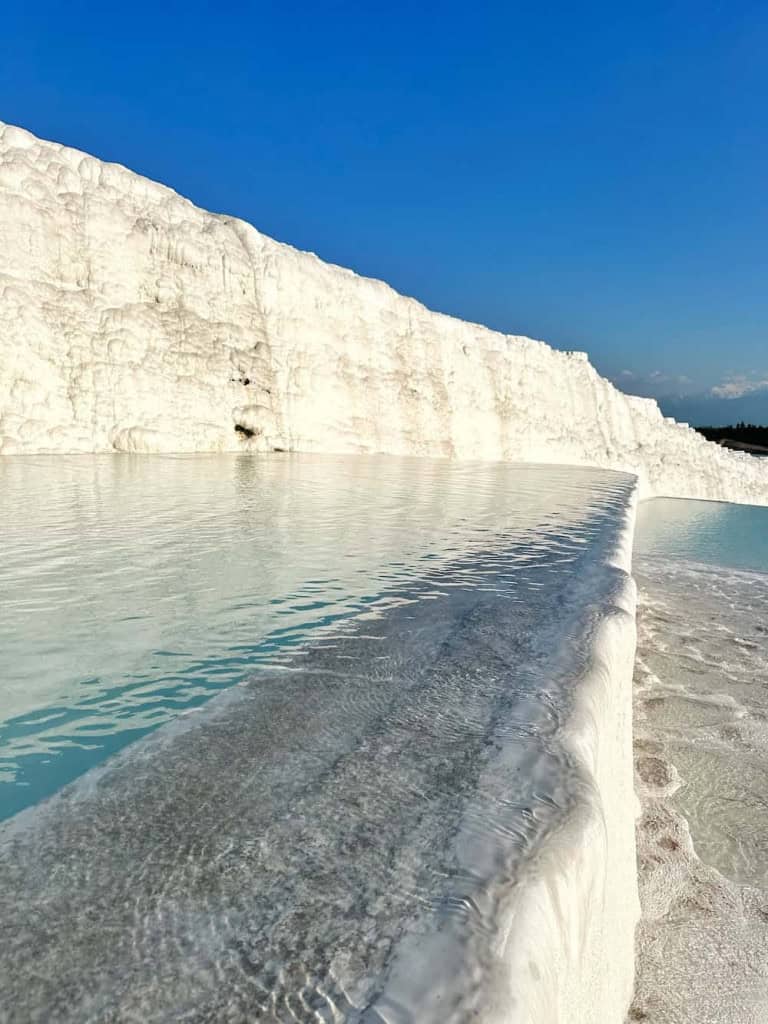
The unique geology is actually made up of solidified white calcium thermal pools cascading down the hill side. The water flowing over them originates from hot springs at the top. And it’s this that over millennia has caused the sedimentary rock called travertine to form.
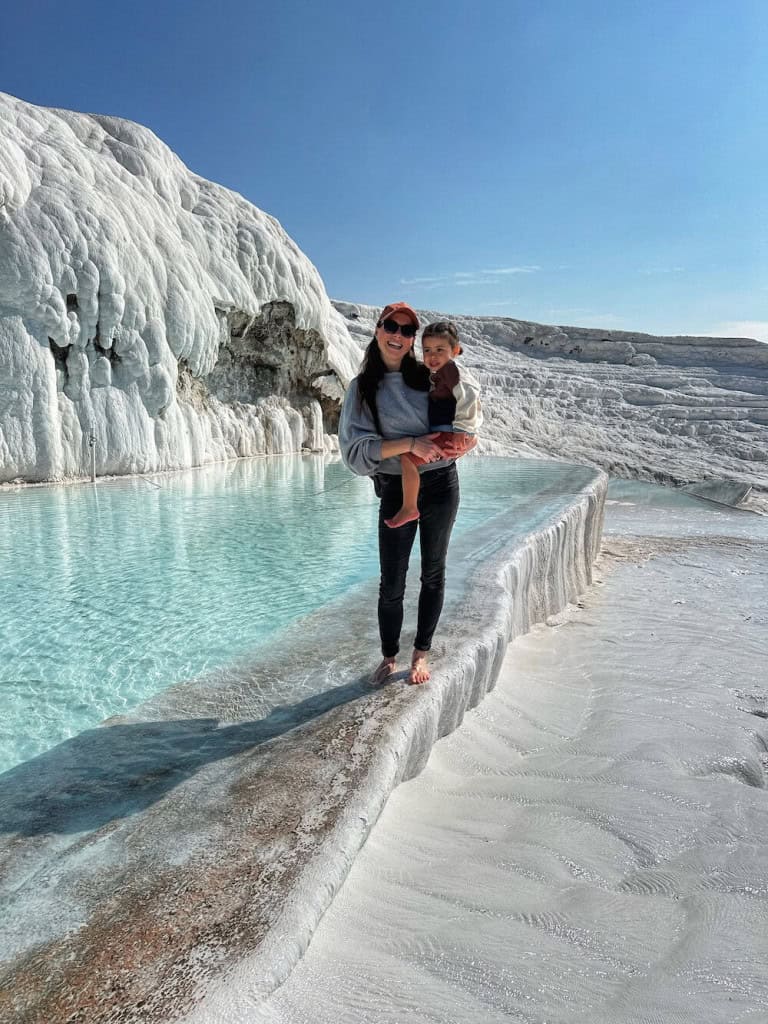
The glassy blue pools of water vary in temperature depending on how far they are from the underground volcanic heat source. Making a perfect natural spa. Which has been known for its therapeutic waters and hence used as a pilgrimage site for many ancient civilizations.
The Thermal Springs
These days tourists are both drawn to marvel at the 200 meter high travertines and to seek out the healing benefits that comes with taking a dip in the mineral rich natural pools. Some are out of bounds for preservation purposes but you can wade or swim in most of them.
Such is the historical importance of the Pamukkale travertine terraces, that in 1988, along with the neighbouring ancient city of Hierapolis they were made a UNESCO World Heritage Site.
Visit The Ancient City of Hierapolis
A Brief History of Hierapolis
Founded by the Greeks, then overtaken by the Romans, Hierapolis became one of the most important religious and cultural sites on the trade route between East and West. Although now ruined, it had a well-established infrastructure, in particular complex water transport systems.
It was twice completely rebuilt following huge earthquakes in 17 CE and 60 CE. But completely abandoned sometime after 1190 when Crusaders conquered the area.
Must-See Ruins in Hierapolis
The Hierapolis ruins are extensive and can be quite the adventure to explore as the entire archaeological site is over 3 kilometers long. The terrain is also quite steep. So unless you are up for a hike, most people either just see a small area or hire a golf buggy to take them around.
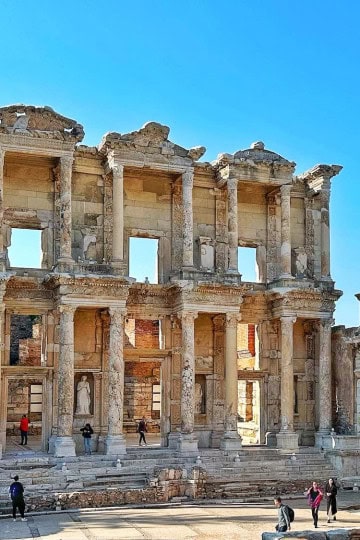
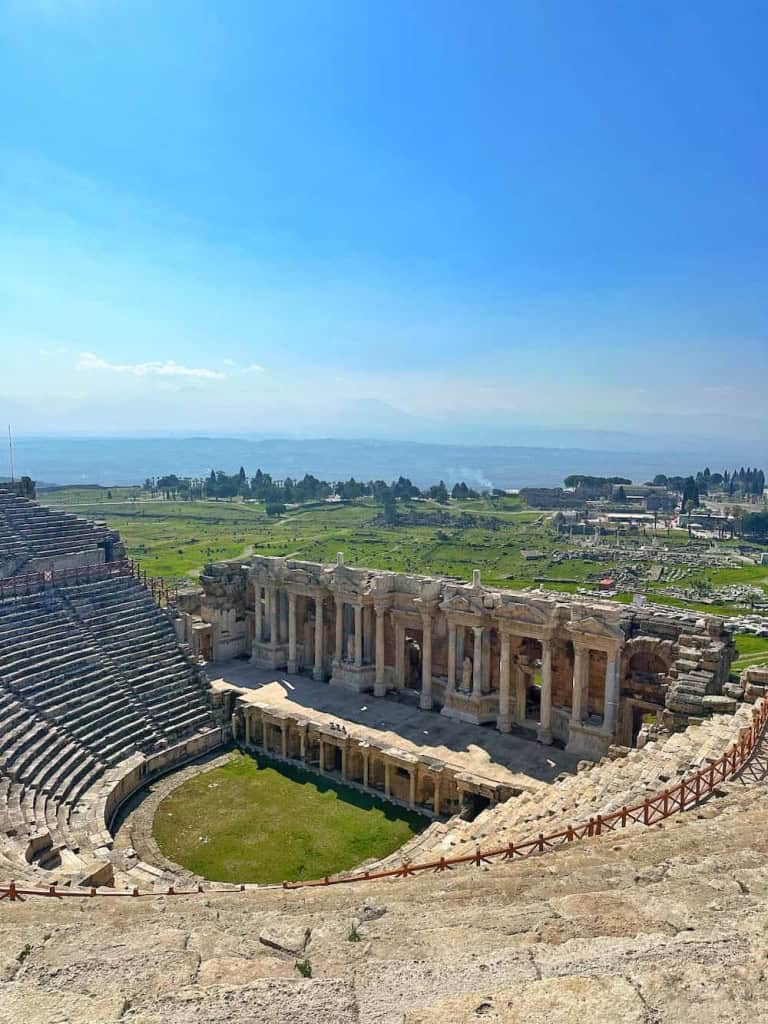
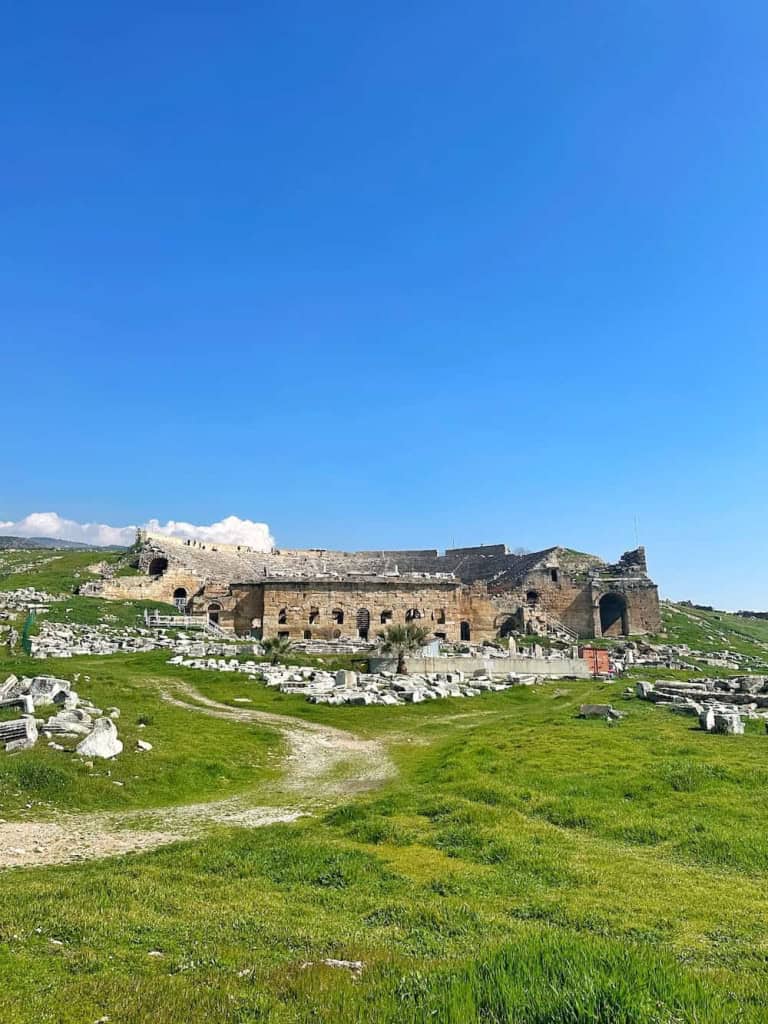
Perhaps the most impressive site is the 15,000 seat amphitheatre. Not only is it incredibly well preserved, but it also has a stunning view with the landscape stretching far off into the distance. It truly rivals the famous ancient ruins of Ephesus.
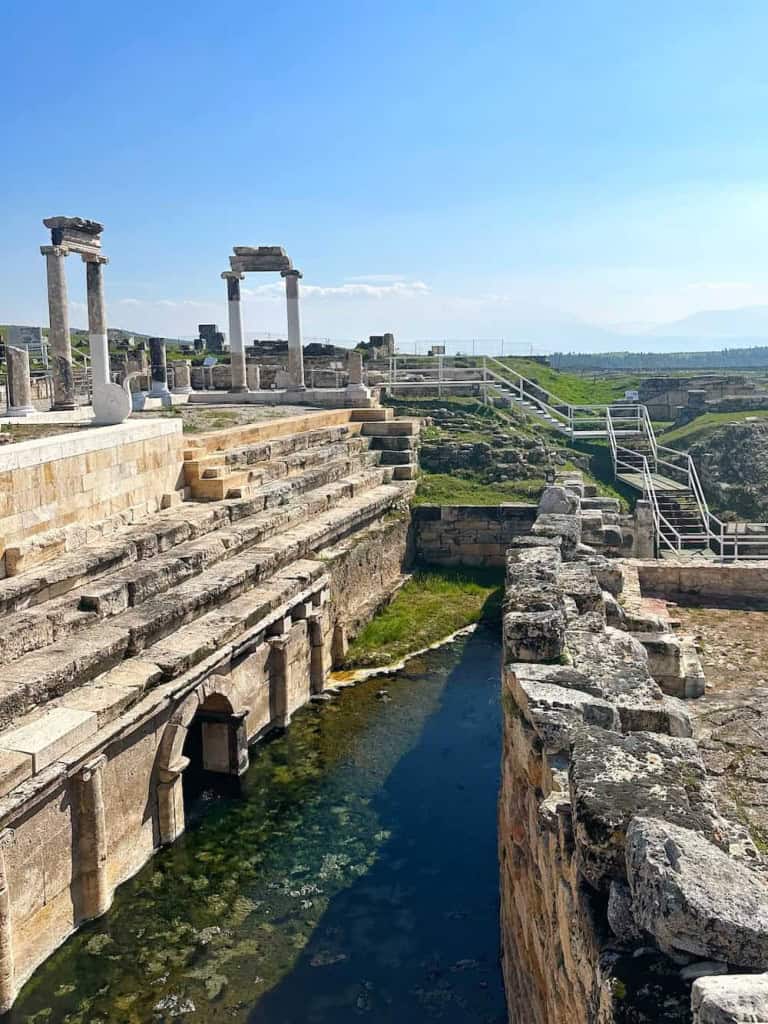
There’s also the unique Plutonian Devil’s Gate, or the Hierapolis gate to hell as it is otherwise known, where fault lines underneath Apollo’s Temple release extremely toxic gases. And the extraordinary octagonal Martyrium where the Apostle Philip, was martyred and buried in the first century AD.
Other notable archaeological structures in the area include one of the largest surviving necropoles in Turkey. The city of the dead has over 1,200 tombs of varying designs and sizes. There’s also two Roman Baths, colonnaded streets and Byzantine gatehouses.
If you hire a golf buggy to explore the Hierapolis archaeological site, it will come with a driver/guide. But there’s an audio guide that you can purchase for wandering around too.
The Museum Of Hierapolis
Contained within the ruins of the restored Central Roman Baths, is also the Hierapolis Archaeological Museum. It holds both important artifacts found within the site and from the surrounding region.
Highlights are the sarcophagi with stunning carvings, intricate statues of gods and goddesses and complex pieces of jewelry. You can also learn more about the restoration and excavation process which went into the site.
Bathe in Cleopatra’s Antique Pool
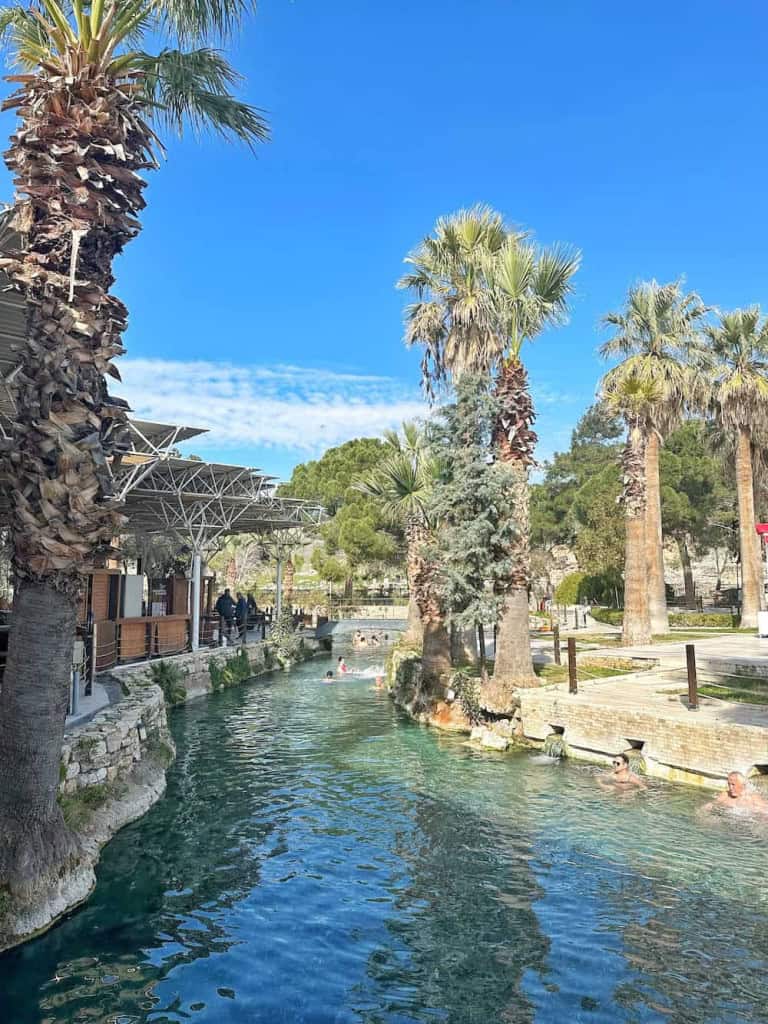
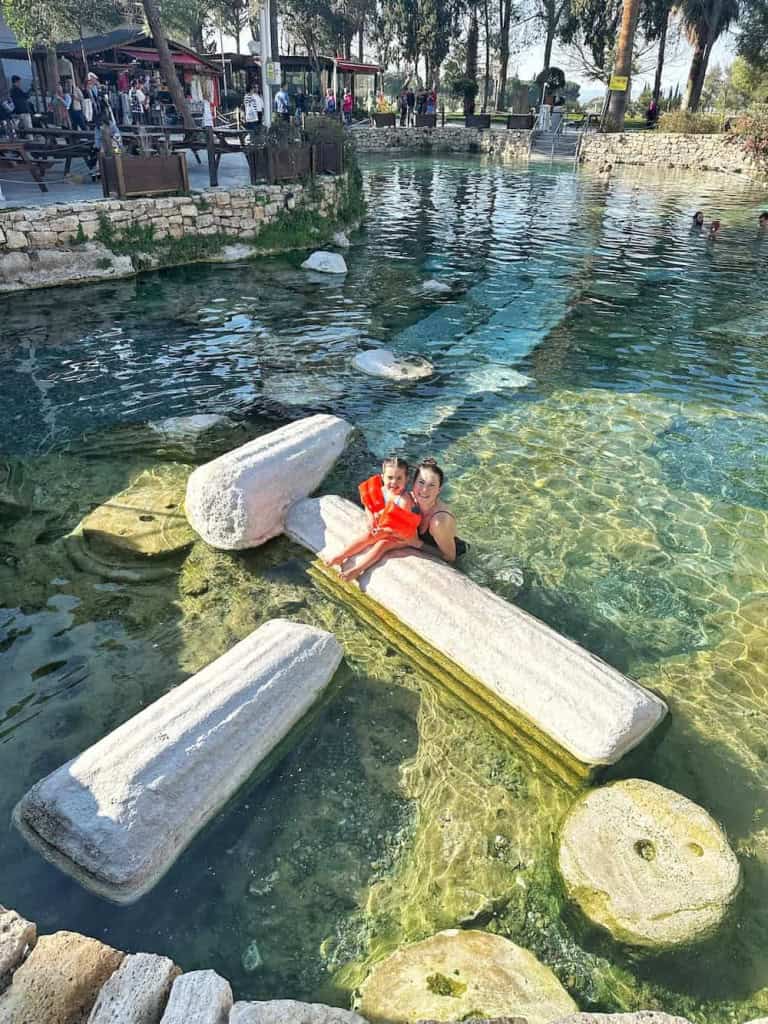
Within the ancient city of Hierapolis is also the Antique Pool where you can have the unique experience of swimming amongst ancient Roman Ruins. The fallen columns in the bottom once surrounded the pool, but fell in during one of the region's powerful earthquakes.
Owing to the legend that Cleopatra bathed here, it is also known as Cleopatra’s Pool.
The therapeutic waters are constantly refreshed by an inflow of hot calcium-laden mineral water.
And amongst many ailments are thought to, in particular, provide relief for asthma, arthritis, digestive problems, acne and varicose veins. The temperature is usually between 36-57⁰C.
There is an additional entrance fee to swim in this pool, but it is most definitely well worth it.
Please note that taking photographs while inside the pool is prohibited.
Pamukkale Attractions Map
Adventure Activities in Pamukkale
Paragliding Over Pamukkale
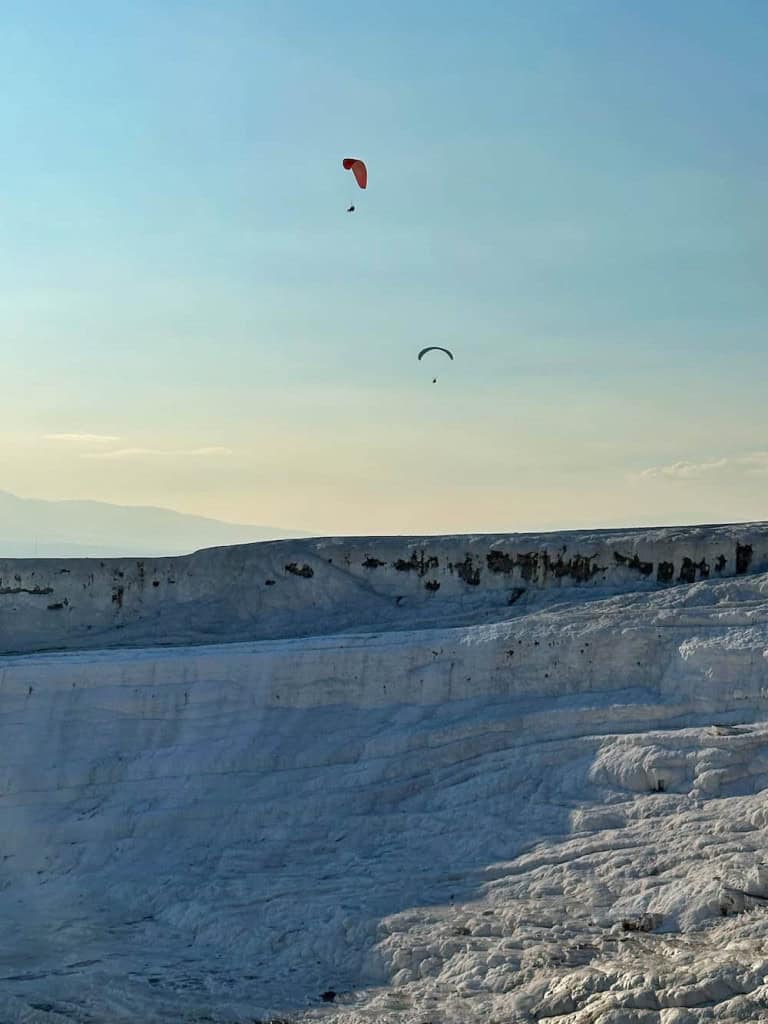
If you are feeling adventurous when looking for things to do in Pamukkale, a thrilling way to experience the magical landscape is to see it from above in a tandem paraglide.
The steepness of the natural terrain provides ideal jumping off points to soar and spiral right over it. This Pamukkale paragliding experience has excellent reviews.
Pamukkale Hot Air Balloon Rides
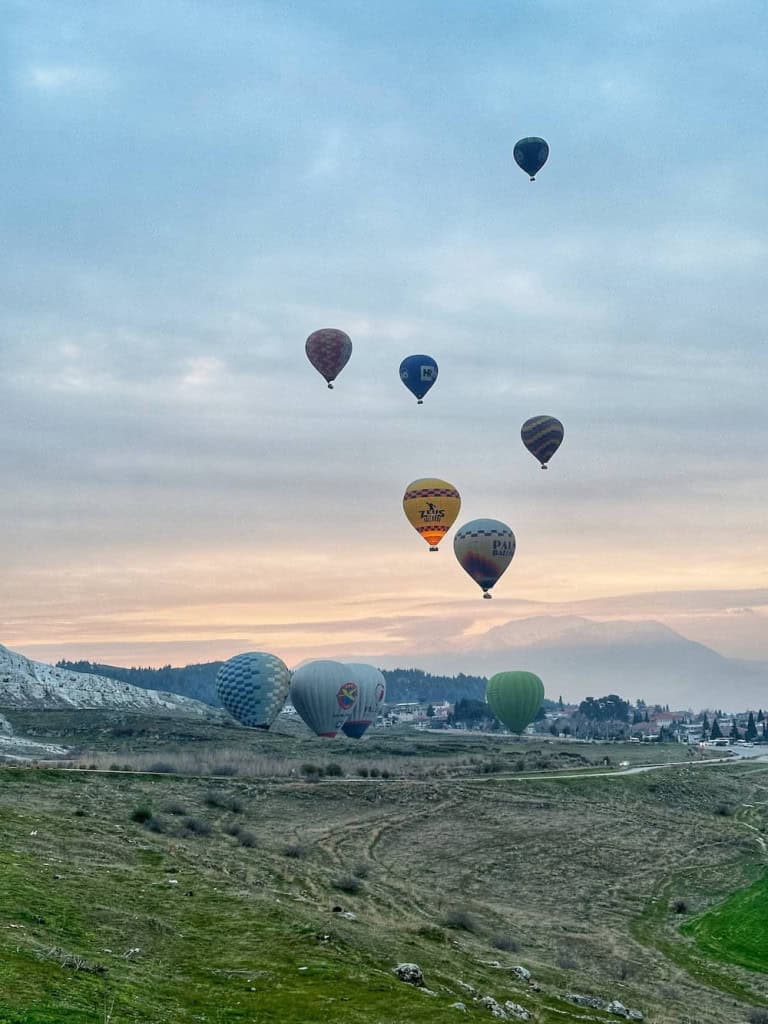
Floating over the scenery in a hot air balloon at sunrise is another popular way to experience the Pamukkale water terraces and ancient city of Hierapolis. From the bird's eye view you can really get an appreciation for the sheer size of the place.
This Pamukkale balloon ride has great reviews. And includes a minimum of one hour in the air plus a champagne toast on landing.
Pamukkale Hiking Trails
If you like walking, there’s plenty of opportunity to get your steps in when visiting Pamukkale, Turkey. Depending on which entrance you approach from you’ll have a 30-45 hike to get to the travertines, either up the hillside or through the ruins of Hierapolis city.
As the ruins of the ancient city of Hierapolis are so spread out, if you are wanting to visit all of it you can spend 4-5 hours just walking around to the various structures. The Martyrium of St Philip the Apostle is in particular quite a distance from the rest of the Hierapolis ruins.
Practical Tips For Visiting Pamukkale
Pamukkale-Hierapolis is located in central Turkey, in the River Menderes valley which is part of the Inner Aegean region. Most visitors visit on day trips from nearby holiday destinations such as Bodrum, Mamaris or Fethiye. But also pass through for the night on route to other places.
How To Get To Pamukkale
By Plane | Pamukkale’s closest airport is Denizli Çardak Airport (DNZ) which is 70km away. There are three flights per day from Istanbul and the journey time is just over an hour.
The providers operating the route are AJet, Pegasus and Turkish airlines.
You can pre-arrange a direct airport transfer to Pamukkale here.
By Bus | Buses run from most major surrounding destinations and go directly into Denizli bus station. From there it’s just a 15 minute journey by local minibus or you can jump in a taxi.
If you are travelling on a tight budget, there are also night buses so you can travel in and out on the same to save on accommodation costs.
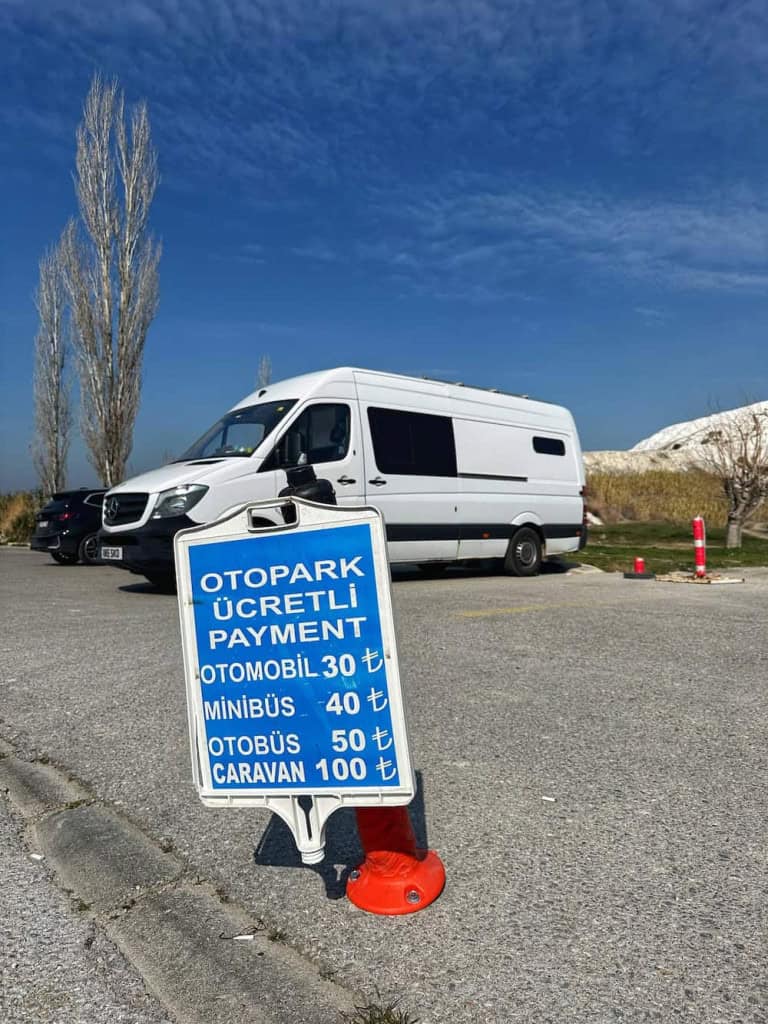
By Car | There’s plenty of parking available at every Pamukkale entrance. Parking charges for the day are up to 100 TL (£2.30GBP / £2.80 USD), depending on the size of your vehicle.
Pamukkale Opening Times
The entrances for Pamukkale-Hierapolis open at 6:30am and during summer are open until 9pm. Over winter opening hours are shorter and gates are closed at 6pm instead.
Pamukkale Entrance Cost
The entrance fee for Pamukkale is €30 Euros (Jan 2025) for adults and children over 6. There’s ticket booths at each entrance and you can pay on card. Alternatively you can also buy e-tickets in advance here.
The ticket allows access to both the Pamukkale travertines and the ancient city of Hierapolis.
Tickets are valid all day and although in theory you should be able to leave and re-enter some people have had problems doing so so it’s best to check before you do.
If you plan to explore more of Turkey, the Turkish Museum Passes also allows access to Hierapolis-Pamukkale so it might be worth considering nabbing one of those.
You can also buy a combined ticket for admission to both Hierapolis and Laodicea, if you plan on visiting that site too.
To swim in the Antique Pool is a separate fee, payable at the entrance to that attraction. The current price (Jan 2025) is 340 TL (£7.80 GBP / $9.60 USD) per adult and 170 TL for 7-12 year olds. Plus an extra 5 TL for a locker.
Pamukkale Entrances
South Entrance | This is the one most people use because it is closest to all three Pamukkale attractions (The Travertines, Ancient Hierapolis and Cleopatra’s Pool). It is also the one that the tour buses use. It is the busiest but also has the most parking. You will need a taxi from town.
Town Entrance | This one is literally in Pamukkale town and hence within walking distance of most hotels and restaurants. It’s a bit of a walk to Hierapolis and Cleopatra’s Antique Pool as you need to go up the hillside to the top of the travertines. But that in itself is pretty cool.
North Entrance | This is the quieter of the three Pamukkale entrances. But you’ll need to walk through Hierapolis for around 20 minutes to get to the main section. Then another 10-15 minutes to the other attractions. It is however the closest to Karahayıt Village if you wish to visit there.
If you are staying in Pamukkale town, a nice option is to take a taxi here and then walk back down the Traverines into town.
How Long Do You Need To Visit
If you just want to see the Pamukkale Travertines, you can use the South Entrance and spend as little as an hour there. But if you want to explore some of Hierapolis and take a swim in Cleopatra’s Ancient Pool, we recommend factoring in 4-6 hours.
We actually spent nearly all day exploring because it just felt like a place we wanted to savour and not rush around. We walked to quite a few of the Hierapolis ruins. And also parked by the town entrance so walked right up and back down the Pamukkale hot springs.
If you want to hike out to the necropolis and St. Philip’s Martyrium you will likely need a full day.
Best Time To Visit Pamukkale
Pamukkale has a temperate climate for most of the year. However it can still get seriously hot at the peak of summer and bitterly cold in the depth of winter.
Therefore May to June and September to October are more comfortable in terms of weather and crowds, with temperatures hovering around the high 20’s to early 30’s degrees Celsius.
If you do visit Pamukkale over peak summer season, you beat the crowds a little by going in as soon as the gates open at 6:30am.
This is before the tour buses arrive so you should get some of the place to yourself for a while. It’s also really beautiful to see in the early morning light. Similarly most tour buses leave for the day mid afternoon so it tends to be quieter then too.
What To Take To Pamukkale
Even if you don’t plan on actually swimming in any of the Pamukkale hot springs, bring your swimwear and a towel just in case. I say this because you will likely change your mind when you see the place. I see a lot of reviews from people regretting they hadn’t.
If you visit Pamukkale over summer, be sure to bring plenty of sunscreen and water to stay hydrated as there is next to no shade. As mentioned, Hierapolis ruins are very spread out and facilities are only found at the entrances so it is especially important for that area.
I would also recommend taking a packed lunch with you. Because although there are a couple of cafeteria’s inside, they are overpriced and not of great quality.
Safety and Etiquette
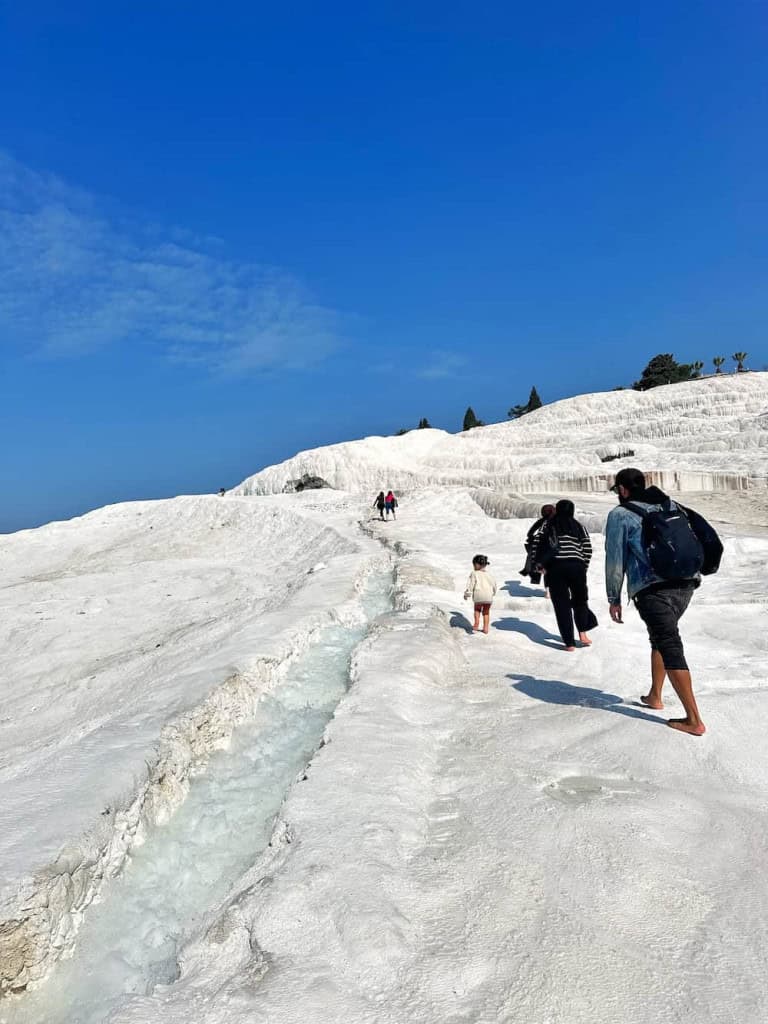
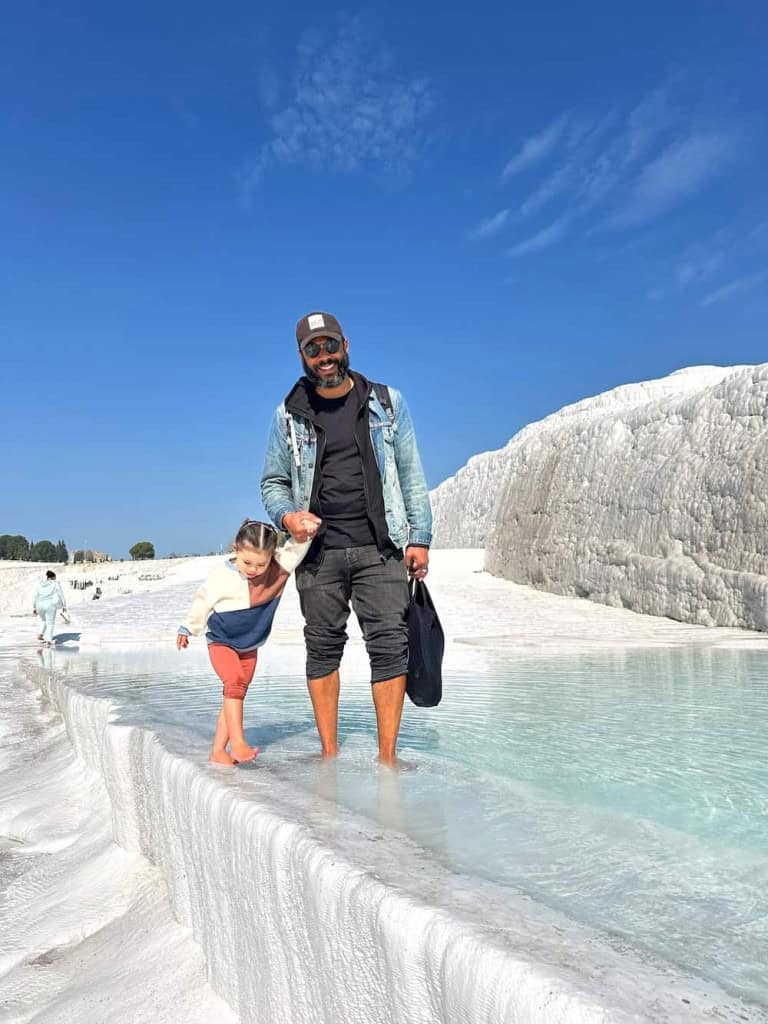
For sustainability and preservation you are required to walk barefoot only on the travertines. So take a bag with you that is big enough to put your shoes in. There are no exceptions to this.
Although you can walk freely around most of it, some of the pools and steeper areas are roped off for safety and restoration reasons. Respecting the natural and historical heritage of the site is imperative so don’t go into the restricted areas. The security is also very strict.
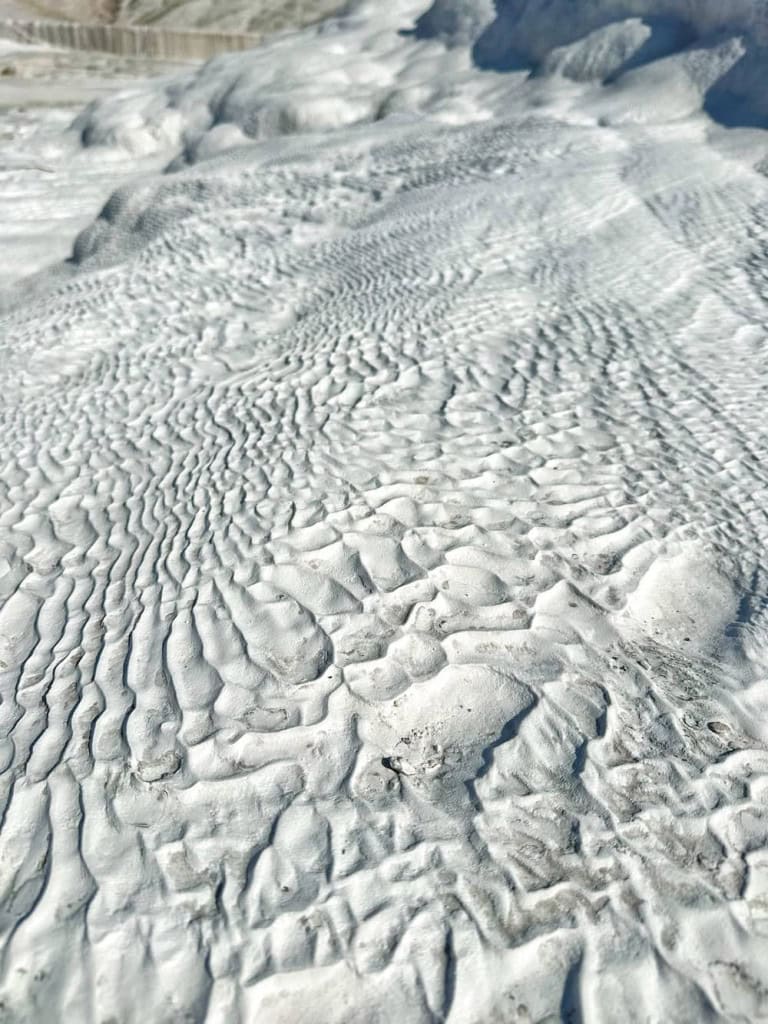
The surface varies from incredibly rough underfoot to really quite slippery in places, so watch where you are treading. Especially when you are occupied snapping photographs.
Discover Nearby Pamukkale Attractions
If you are sticking around Pamukkale for more than a day, there’s also lots of other fascinating things to see nearby. You will however need a car or taxi to get around to most of them.
Laodicea
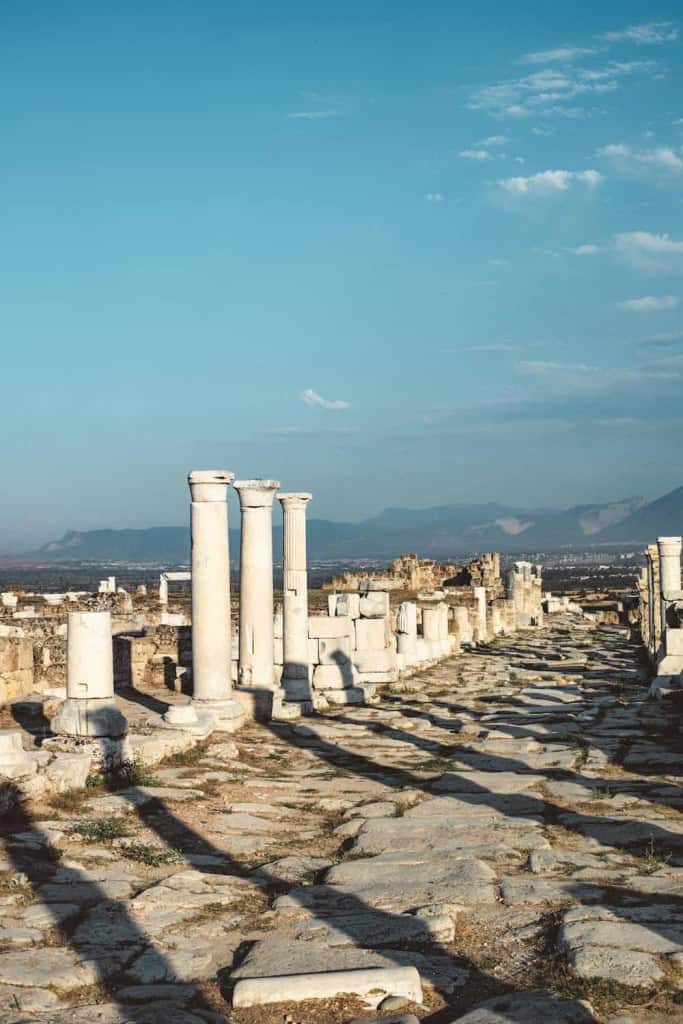
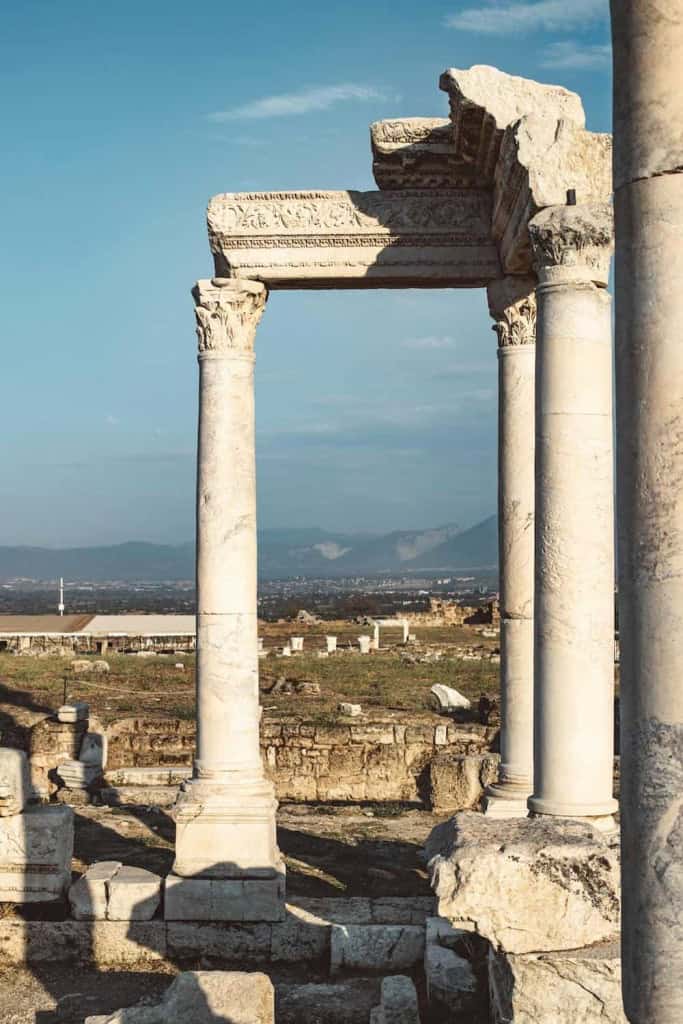
Around a 15 minute drive from Pamukkale-Hierapolis is another ancient city called Laodicea. The 7500 year old site has been really well excavated and restored. There’s a massive stadium, two theatres, four baths, lots of impressive agoras, fountains, temples and several churches.
In its heyday Laocicea was an extremely profitable trade centre for wool as the surrounding plains were perfect farming sheep. It also features in the New Testament of the Bible as one of the Seven Churches of Revelation.
You’ll need around 3 hours to explore the site fully, but you can choose a shorter route if you are short on time. The ticket price is €12 per adult (Jan 2025).
But It is possible to buy a combined ticket for Hierapolis and Laodikeia if you want to see both on the same day which makes it a little cheaper. An audio guide is also available to purchase.
Kaklik Cave
Just over half an hour drive from the famous Pamukkale travertines you’ll find Kaklik Cave. Often referred to as a mini underground Pamukkale, there’s a hot spring running through it
with the same clear blue mineral water flowing over travertine formations.
This unusual underworld was actually only discovered quite recently when the ceiling of the enclosed cavern fell in. Wooden steps take you down into it and there’s a circular walkway around it. Either take some swim shoes with you or be prepared to take your shoes off as the underground stream flows over it in places.
Outside there’s a swimming pool with changing rooms and showers that you can use free of charge. It is only open in summer though.
It’s less than 30 minutes to explore inside the cave and as it’s much less popular with tourists, it's usually fairly quiet. The entrance fee is 35 TL (Jan 2025) per adult (£0.80 GBP / $1 USD) and parking is included in the price.
Karahayit Village
Less than 15 minutes drive from Pamukkale is the charming village of Karahayit. If you want to have more of an experience of Turkish culture beyond the major tourist attraction of the travertines, this is an excellent place to do it.
Nestled amongst the winding streets you’ll find quaint little shops selling local products and small family run restaurants with delicious and affordable food. There are also a few small hotels, which offer a more economical option to Pamukkale accommodation.
The village is also home to Karahayit Red Springs, which is basically the low budget version of Pamukkale and where you’ll find Turkish people hanging out.
Aphrodisias
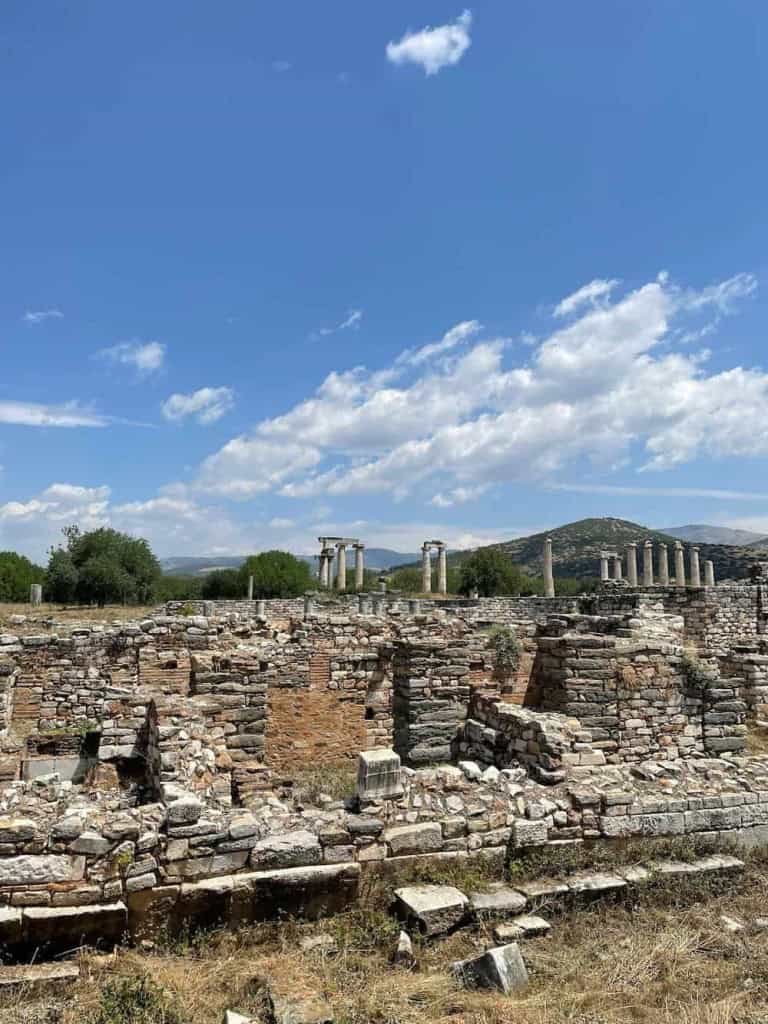
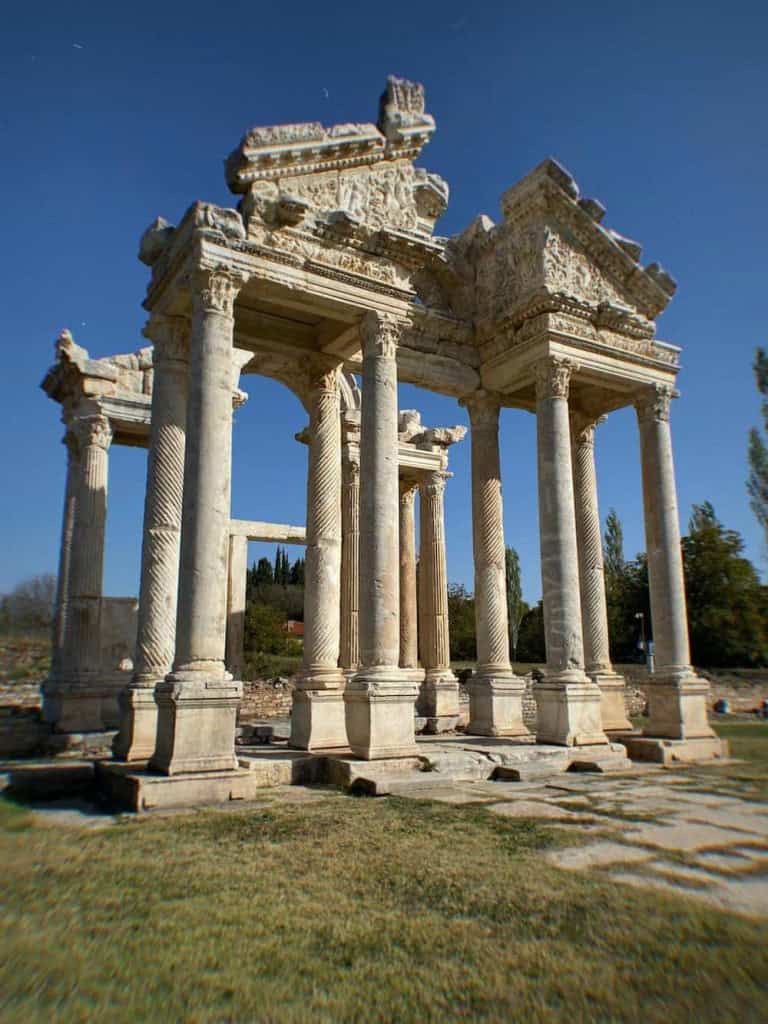
Just over an hour drive away from Pamukkale hot springs is yet another ancient city called Aphrodisias. It was named after Aphrodite, the Greek goddess of love. Unfortunately it never fully recovered from a major earthquake in the 7th century and fell into disrepair.
Notable structures are the monumental gateway (tetrapylon), the Temple of Aphrodite, The Bouleuterion (council house) and the gigantic 30,000 spectator Stadium.
The site is smaller than others in the area but no less spectacular and was added to the UNESCO World Heritage Site list in 2017. There’s free parking and the entrance fee is currently €12 (Jan 2025) for adults.
Colossae
Once a thriving city in the fertile valley of the Lycus River, these days the ancient city of Colossae is almost forgotten and all you’ll find here right now is mainly an unexcavated mound.
But the area is beautiful and just a 30 minute drive from Pamukkale. Admission is free and you can walk around it in about half an hour and try to spot ruins of a small theatre and necropolis.
Excavations are supposed to be starting soon and will be led by a professor at the Pamukkale University. The site has an incredibly rich history and was addressed in two of the Apostle Paul's epistles, so holds a whole city of mysteries excitedly waiting to be unearthed.
Where To Eat In Pamukkale
Because much of Pamukkale town is focused on tourism these days, unfortunately the quality and affordability of some restaurants can sometimes be hit and miss. But there are a few places we’d recommend:
Yagmur Restaurant | Prices at this family run place are very reasonable compared to other Pamukkale restaurants and the food is made fresh to order. The Adana Kebab and Meat Skewers are very good, as are the lentil and tomato soups.
Address: Cumhuriyet Medani, No.9
Opening Times: Everyday from 9am
Gülsüm Bacinin Yeri | Another family run Pamukkale restaurant that consistently gets great reviews for the warm and friendly service. The prices are good, ingredients are fresh and the gözleme is made right in front of you.
Address: Cumhuriyet Medani, No.5
Opening Times: Everyday from 6am
As Teras Manti Evi | This small place prides itself on tasty food at affordable prices, with awesome service. The breakfast menu is great and there’s plenty of vegetarian options. The manti and the kunefe for desert are winners.
Address: Traverter Sk, No.1
Opening Times: Everyday from 6am
Where To Stay In Pamukkale
During peak season Pammukale gets very busy and all the best hotels get booked up well in advance so don’t miss out. These are the pick of the bunch for each budget:
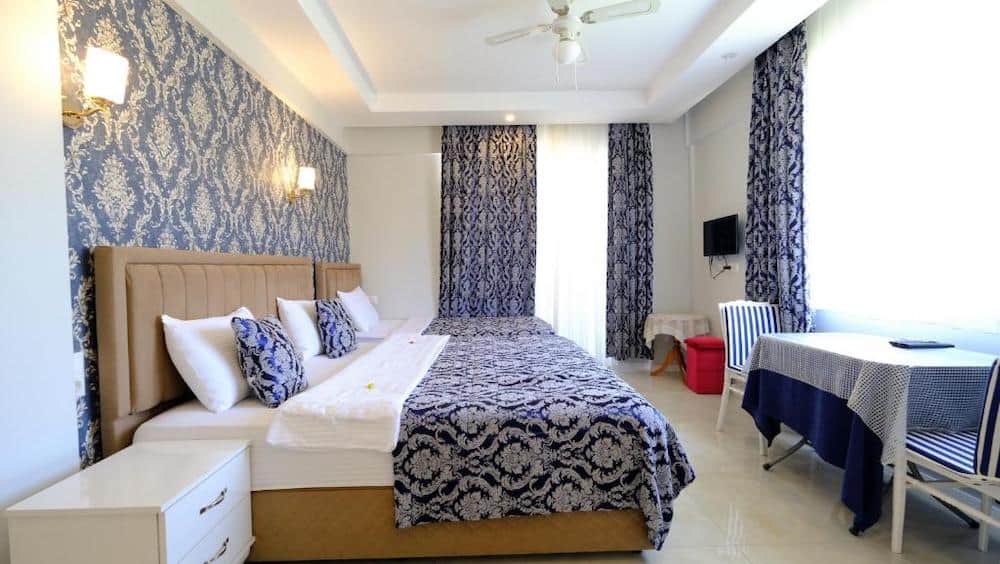
Budget Friendly | The Cotton House Hotel
People really enjoy staying here. The owners are charming, beds are comfortable, there’s plenty of hot water, it’s incredibly clean and in the perfect location for visiting the travertines.
Check reviews, prices and availability here.
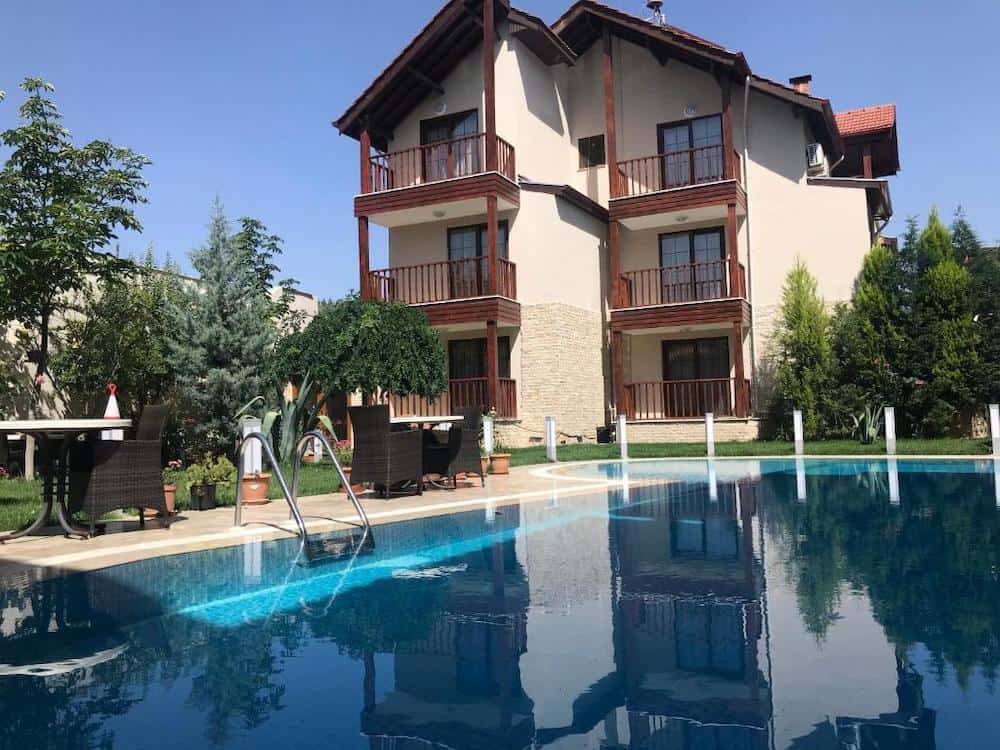
Mid Range | Venus Hotel
Surrounded by a lush garden with a swimming pool, just a five minute walk to the travertines. The rooms are spacious with private balconies and quadruple rooms for families are available.
Check reviews, prices and availability here.
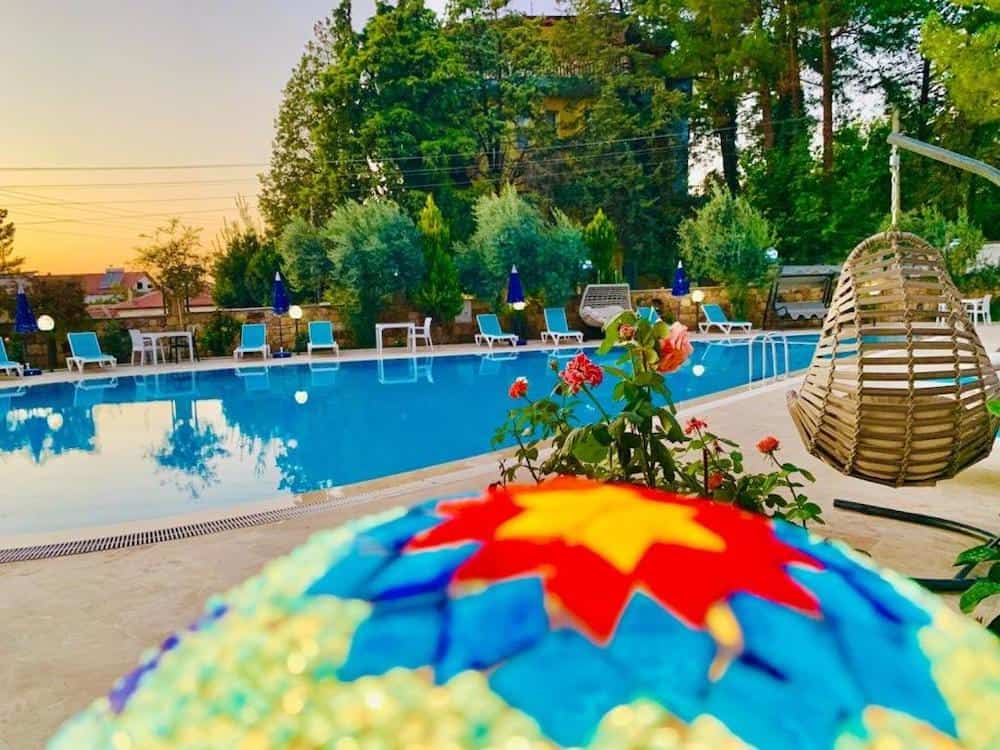
Luxury | Pamukkale Whiteheaven Suite Hotel
The large suites feature seating areas, private balconies, complimentary toiletries and a coffee machine. There’s sports facilities, an outdoor swimming pool and a children's playground.
Check reviews, prices and availability here.
Pamukkale FAQ’s
Is Pamukkale worth visiting?
Absolutely. It really is one of those bucket list destinations that genuinely makes you go wow! The mix of natural beauty of the travertines with the ancient history of Hierapolis is so unique, you simply can’t fail to be impressed by Pamukkale.
Are Pamukkale and Hierapolis the same thing?
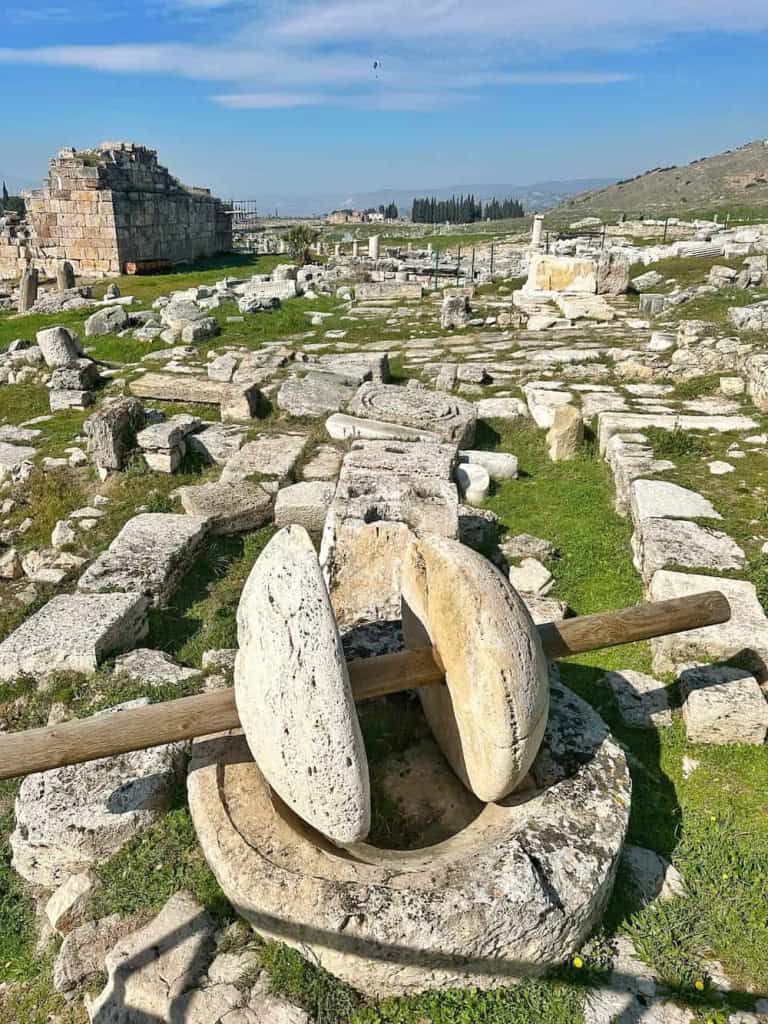
Pamukkale refers to the modern town that is dominated by the thermal waters flowing down over the white travertine terraces that cascade down the hillside. While the city of Hierapolis, at the top of the hill, is an archaeological site packed with ancient Greco-Roman ruins.
Is Pamukkale a UNESCO site or a wonder of the world?
Pamukkale is not officially recognised as one of the natural wonders of the world. However Hierapolis Pamukkale was jointly declared as a UNESCO World Heritage Site in 1988.
Is Pamukkale natural?
Yes, the Pamukkale travertines are completely natural. They were formed over millions of years by mineral-rich thermal waters from hot springs flowing over the hillside. Specifically by rapid precipitation of calcium carbonate which is what gives sedimentary rock its pure white colour.
Can I eat and drink at Pamukkale?
Whilst there are a few cafes within the Pamukkale-Hierapolis site, the food isn't of great quality and prices are inflated. They are fine to grab a drink and a snack at. But for a proper meal, head down to one of the small family run restaurants in Pamukkale town.
What is the weather like in Pamukkale?
Summers are hot and winters are cool. The coldest and rainiest month is January with daytime temperatures around 12°C and it rains around 9 days of the month. The warmest and driest month is August. It rains on average only 1 day with daytime temperatures peaking at 37°C.
Which is the best month to visit Pamukkale?
The best month to visit Pamukkale is September or October. This way you can avoid the busy summer tourist crowds and the intensity of the heat. It will still be warm with temperatures above 20°C but you can comfortably wander around and swim in the Pamukkale hot springs.
What is the best time of day to visit Pamukkale?
One of the best times of day to visit Pamukkale is as soon as it opens at 6:30am in the morning, when you will likely have the entire site to yourself. Another good time of day to visit Pamukkale is in the late afternoon around 4-5pm (after the tour buses have left) and stay until sunset.
How much time do I need in Pamukkale?
Most people spend 4-6 hours there but it depends entirely on how much you wish to see. If you wish to fully explore the Hierapolis ruins in their entirety you will need a full day.
Can you swim in Pamukkale?
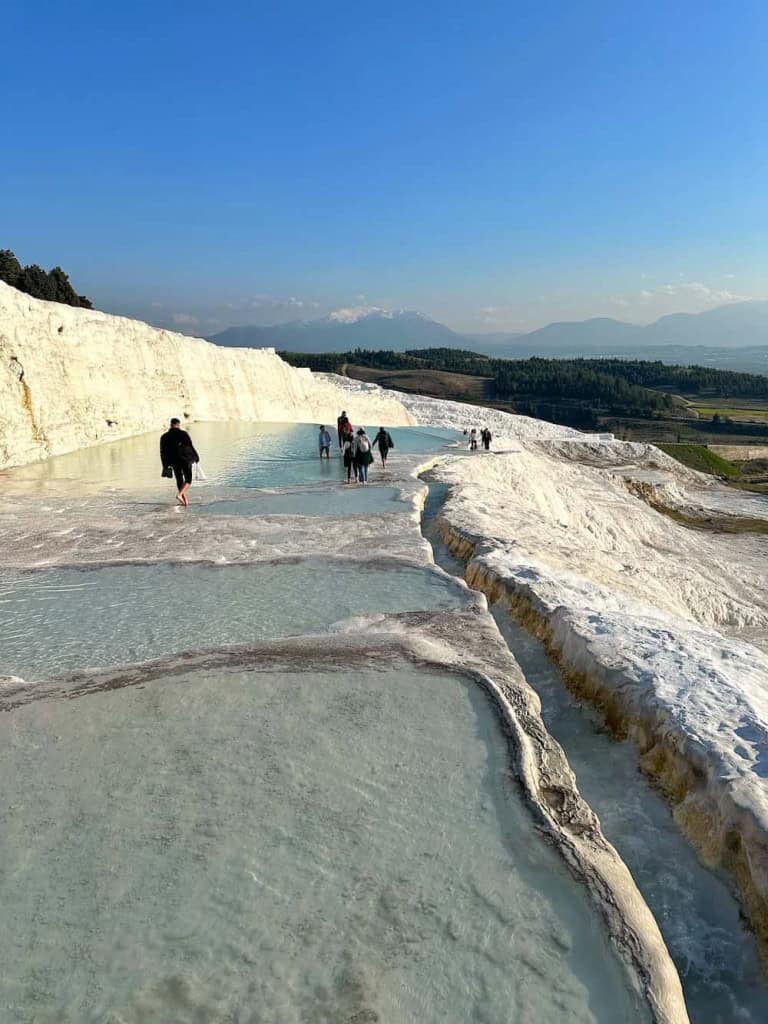
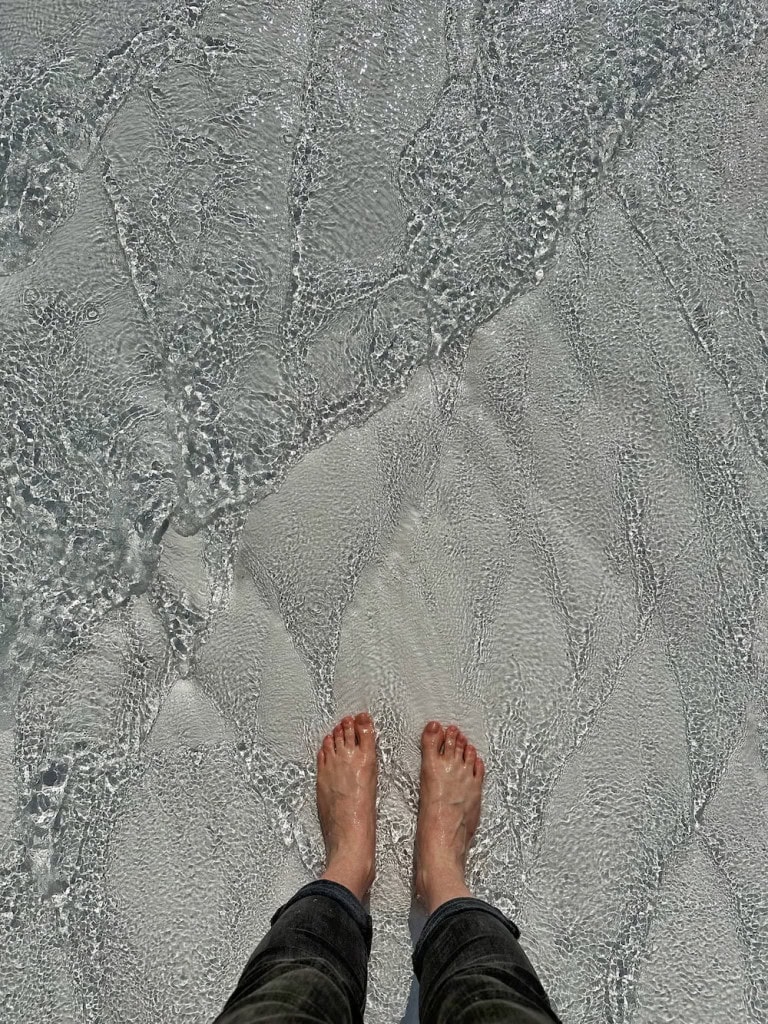
Yes you can swim in the Pamukkale white terraces although some of the water is quite shallow so most people just wade through it, dip their feet in or sit in the wide channels running down the edges. The best place to swim properly is in the hot springs in Cleopatra’s Antique Pool.
What should I wear in Pamukkale?
The best thing to wear in Pamukkale is layers. In summer, the sun can be intense and there is little shade so you should keep your shoulders and head covered. If you are visiting Pamukkale over winter, wear a coat and hat to keep you warm as the cool weather can feel quite harsh.
What should I bring to Pamukkale?
Things to bring to Pamukkale include swimwear, towels, a waterproof bag for valuables and in summer plenty of water to drink. We also recommend bringing a packed lunch with you and comfortable walking shoes if you are planning on exploring the Hierapolis ruins.
Why did Pamukkale dry up?
A decade ago, the turquoise water used to flow freely over all of the travertines. But since a boom in tourism some of it has been diverted to newly built hotel pools. Popularity on social media has also played a role and over tourism has caused some damage and discoloration.
What is the nearest town to Pamukkale, Turkey?
The closest town to Pamukkale is Denizli, which is around 20km south. This is also where the closest airport is. From there you can take a local minibus or you can jump in a taxi. The journey time is just around 15 minutes.
Is Pamukkale safe?
Pamukkale is very safe. Although as with all major tourist destinations anywhere, you should be cautious of pickpockets. Some of the Pamukkale water terraces can also be quite slippy and it’s not unheard of for people to fall and get injured so take care when walking over them.
What else can I see in the area around Pamukkale?
If you have the time there are lots of other attractions near Pamukkale to explore. There’s the other ancient cities of Laodicea, Aphrodisias and Colossae. Kaklik Cave, which is best described as a mini underground Pamukkale, and the nearby charming village of Karahayit.